Best fishing Lines: Monofilament vs Braided vs Fluorocarbon Line
Best fishing Lines monofilament vs braided vs fluorocarbon fishing lines. Learn strength, stretch, visibility, and choose the best fishing line for success.
The selection of fishing line is one of the most crucial choices made by an angler before going to the water. Monofilament lines, braided lines, and fluorocarbon lines are all used in different applications and they all work differently based on the fishing type, water clarity and the type of fish. Knowledge of the strengths and weaknesses of the different types of lines assists the angler to be able to optimize his casting range, his sensitivity and general success of the catch.
Most novices have difficulties in determining the best fishing line to use. There are more flexible lines and those which are more powerful or invisible. This guide separates the monofilament, braided and fluorocarbon fishing lines into details. Through performance, durability and best-use scenario comparison, the angler is assured of making the right decisions in terms of selecting the best fishing line that matches a fresh water and a salt water fishing environment.
What Is Monofilament Fishing Line
Monofilament is a single nylon fishing line that is flexible, stretches and is easy to use. It is naturally capable of floating on water so it is best used with topwater lures, live bait fishing, and general-purpose angling. Its flexible nature is forgiving and absorbs the shock when it is struck by the fish, lessening the possibility of breaking and losing hooks as part of aggressive fights.
It is a very popular line among the amateurs, as it is cheap, simple to tie and can be found easily. Nevertheless, monofilament is more visible when underwater and is more weakened with time as a result of UV exposure. In spite of these limitations, it is a good and durable fishing line that can be used by amateur fishermen and light or medium freshwater fishing.
What Is Braided Fishing Line
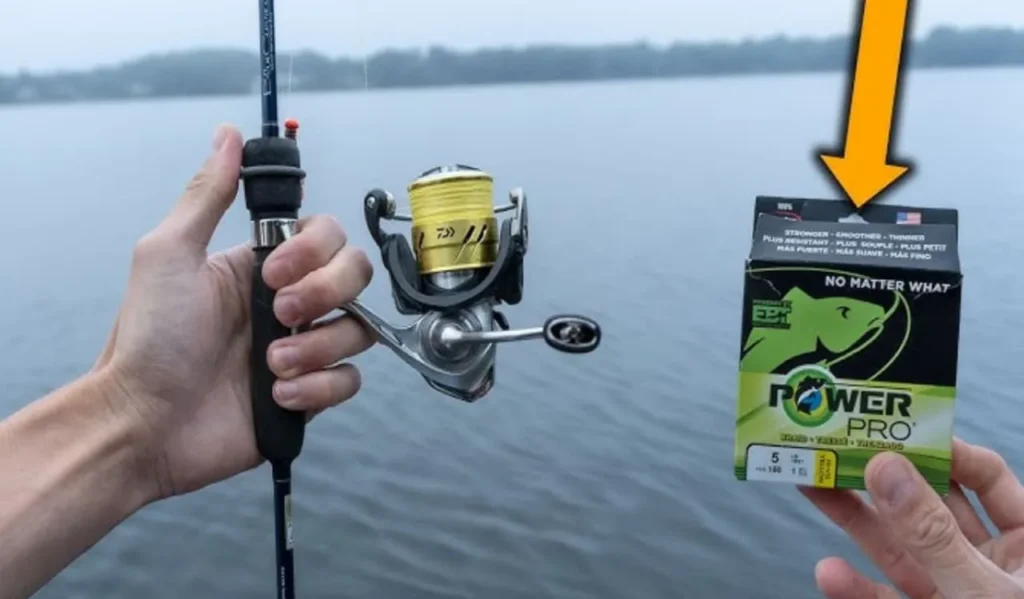
The braided fishing line is made by weaving several synthetic fibers to form a very strong and thin line. It provides virtually no stretch and this gives it an extraordinary sensitivity and immediate bite detection. This renders braided line ideal in deep-water fishing, situations with heavy coverage and those that demand the highest power of hook-setting and direct lure control.
Must-Read Guide for Anyone Looking for Top Rods
The braided line also enables the angler to spool more line on his or her reel since it has a thin diameter. It is also very abrasion-resistant and works well in taking fish out of weeds, rocks and heavy structure. Nevertheless, it has a high visibility in water and a predisposition to slip knots, which makes it better to use specific knots and fluorocarbon leaders.
What Is Fluorocarbon Fishing Line
Polyvinylidene fluoride is used to manufacture fluorocarbon fishing line which is almost invisible when in water. Its refraction of light is very similar to water and thus it is not easy to be detected by fish. This is why it is perfect when it comes to fishing clear waters and catching suspicious species that are easily put off by the presence of fishing line and unnatural displays.
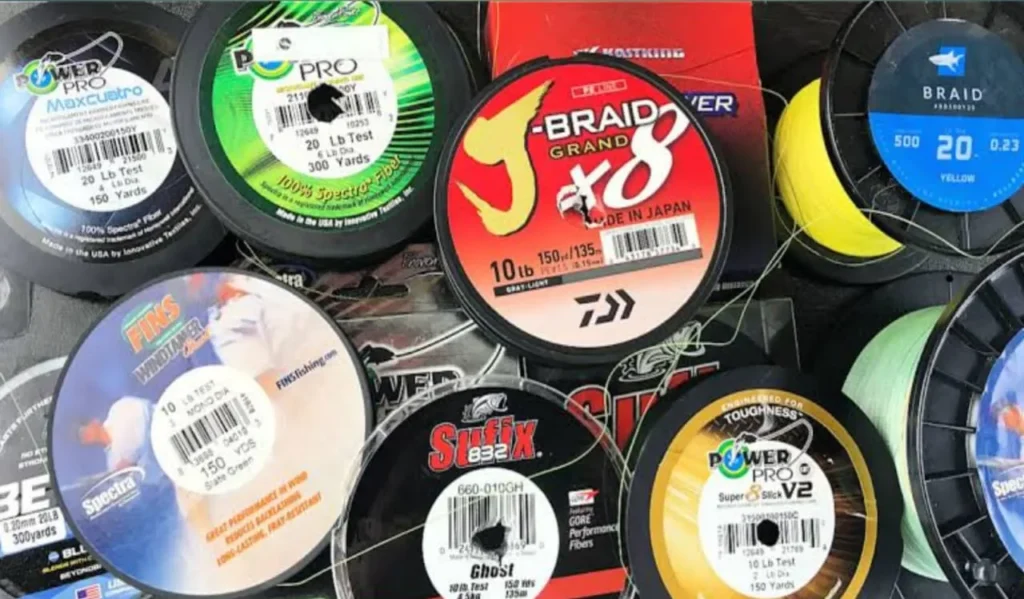
Fluorocarbon sinks naturally and is thus a good product in bottom contact method like jigging, worm fishing and deep presentation. It is more sensitive and has high abrasion resistance than monofilament. But it is also more rigid and more costly thus being a little harder to handle by the novice.
Strength and Pound Test Comparison
Comparing the strength, it is evident that braided line is the winner as it has the highest pound test at the lowest diameter. Braided 30-pound line is thinner than 10-pound monofilament, and may be used by the angler. This provides the ability of longer cast, higher capacity of the reel and more power to struggle against strong fish species in heavy cover conditions.
Monofilament is of medium strength and can be used in light to medium fishing. Fluorocarbon is in between mono and braid in strength and also is high in abrasion resistant. The selection of the appropriate pound test is based on the target species, water conditions and fishing method in order to balance the pound test and performance in the best way possible.
Stretch and Sensitivity Differences
Stretch is a significant factor in the sense of the angler on a bite and hook setting. The most stretchy is monofilament which is forgiving but less sensitive. Braided line nearly has zero stretch and provides the angler with direct contact with the lure and immediate feedback on all movements which is optimal in deep water when the fish make light bites.
Fluorocarbon has average stretch which provides a balance between sensitivity and shock absorbing. It is sensitive as compared to monofilament yet is not that stiff as braid. Knowledge of stretch variations enables the angler to select the right line with methods of topwater fishing, jigging, casting crankbait, and finesse methods.
Visibility Underwater Comparison
The visibility of the line has a great influence on the fish behavior, particularly in transparent water. The monofilament and braided lines can be seen easily underwater thus minimizing the number of strikes made by suspicious fish. The fluorocarbon is almost invisible and therefore it is the ideal one to use in pressured fisheries, clear lakes, and very educated species of fish.
Visibility is not as important in muddy or stained water and thus braid or monofilament can be used by the angler. Anglers often use a combination of braided main line and fluorocarbon leaders in order to obtain maximum strength and minimum visibility. The regulation of line visibility to the water clarity improves the strike rates and the general fishing success to a great extent.
Best Uses for Monofilament Line
Monofilament is the most suitable when fishing for beginners, topwater and live bait. Its buoyancy is natural that allows lures remain on the surface correctly and its stretch does not allow sudden shock to tear the line. It performs very well with spinning reels and recreational freshwater fishing of species such as bass, trout and panfish.
Must-Read Guide for Top Picks of Best Fishing Reels
The use of this line in trolling is also common because of its shock absorbing nature. Nonetheless, there is need to replace monofilament more often by the angler as a result of exposure to sunlight and absorption of water. This notwithstanding, it is one of the most versatile and user-friendly types of fishing lines in the market.
Best Uses for Braided Line
Braided line has been performing well in heavy vegetation, thick cover and deep water fishing. It is perfect when it comes to frog fishing, flipping, punching and offshore jigging where strength and sensitivity are important. It has a slim diameter that enables the angler to cast a greater distance and have high lure control even when casting a long distance.
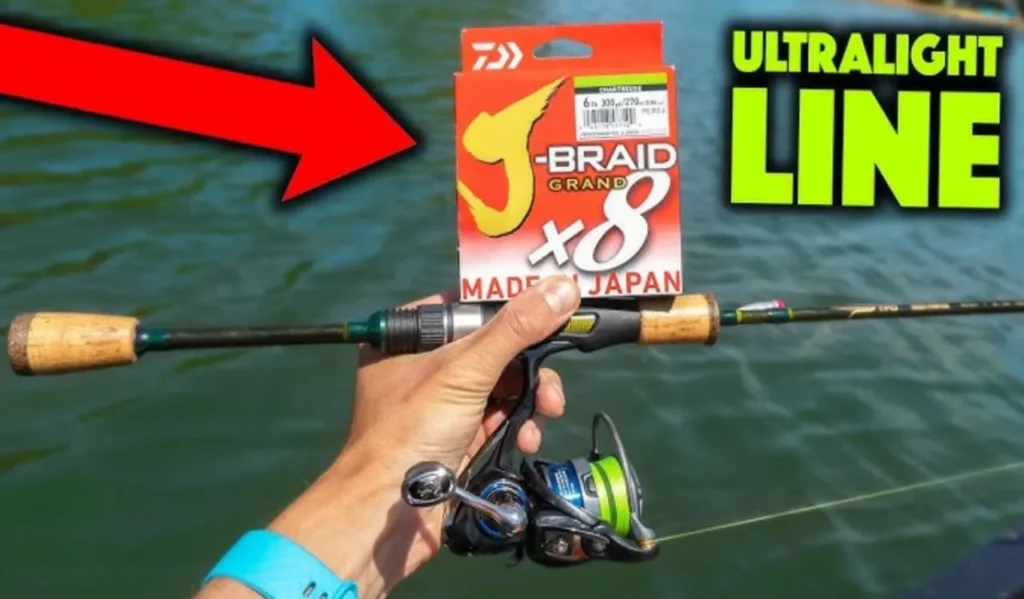
Saltwater fishing is also done with this line because it has great pulling power and can be used longer. Nevertheless, it is very visible and so it is commonly used with fluorocarbon leaders. Braided line is most effective in cases where the angler requires the greatest strength, least stretch, and best bite detection in aggressive fishing.
Best Uses for Fluorocarbon Line
Fluorocarbon is the most suitable in clear water fishing where there is need to be invisibility of the line. It works very well with delicate techniques like drop-shotting, jig fishing and soft plastic presentations. Its sinking property has assisted it in keeping the depth constant so that the lures can remain longer in the zone of attack to increase the chances of capture.
This line is also a great abrasive resistant line around rocks, docks and under water structure. Anglers are fond of using fluorocarbon as the material of leader in freshwater and saltwater fishing. It is also stiffer than monofilament, but it is the best one with the stealth and sensitivity, which is a favorite of advanced fishers.
Which Fishing Line Should You Choose
The decision between monofilament, braided and fluorocarbon lines would be determined by the style of fishing, water conditions and level of experience. Novices can find monofilament useful because it is easy to use. Braided line can be used by anglers that are fishing heavy cover or deep water, as it is most sensitive and powerful.
In clear water and finesse fishing, fluorocarbon is the most preferred choice as it is the most invisible. Most people use braid mixed with fluorocarbon leaders in order to enjoy the benefits of both leader types. Knowledge on the performance of each line is used to make the ideal setup of freshwater and salt water fishing by the angler.
FAQs About Best fishing Lines
Final Thoughts
Each of the monofilament, braided, and fluorocarbon lines has its specific use according to the fishing conditions and the individual choice. Monofilament is forgiving and easy to use, braided line is unmatched in strength and sensitivity and fluorocarbon is stealthy and resistant to abrasion. These differences make it possible to understand how to develop more productive structures to ensure a successful catch.
Instead of selecting a single line to use in all scenarios, experienced fishermen vary the line they use depending on water clarity, fish species and fishing method. Through the skills of each type of line, the angler learns to enhance the detection of bites, the ability to set the hook, and the success of landing the fish and experience a much more comfortable and confident fishing adventure in all areas.