
Freshwater Reel vs Saltwater Reels: Durability & Performance
Freshwater reel vs saltwater reel comparison for corrosion, drag, strength, weight, and performance to help you choose the right reel for any fishing environment.
Fishing reels are made in various ways based on the environment they would be used in either fresh water conditions or saltwater. Freshwater reels are concerned with lightness, ease of casting and middle strength. Salt water reels are concerned with corrosion, power and longevity. The knowledge of the difference will assist the angler to identify reels that will work better and longer in their respective fishing conditions and environments.
The improper selection of reel may cause corrosion, mechanical failure and poor performance. Some best fishing reels might not be able to withstand the salty water environment when used in freshwater environments and vice versa. Anglers can save money by knowing the difference in their materials, sealing, drag systems and construction and thus they can get the same performance when fishing in different lakes and rivers as well as oceans.
What Is a Freshwater Reel?
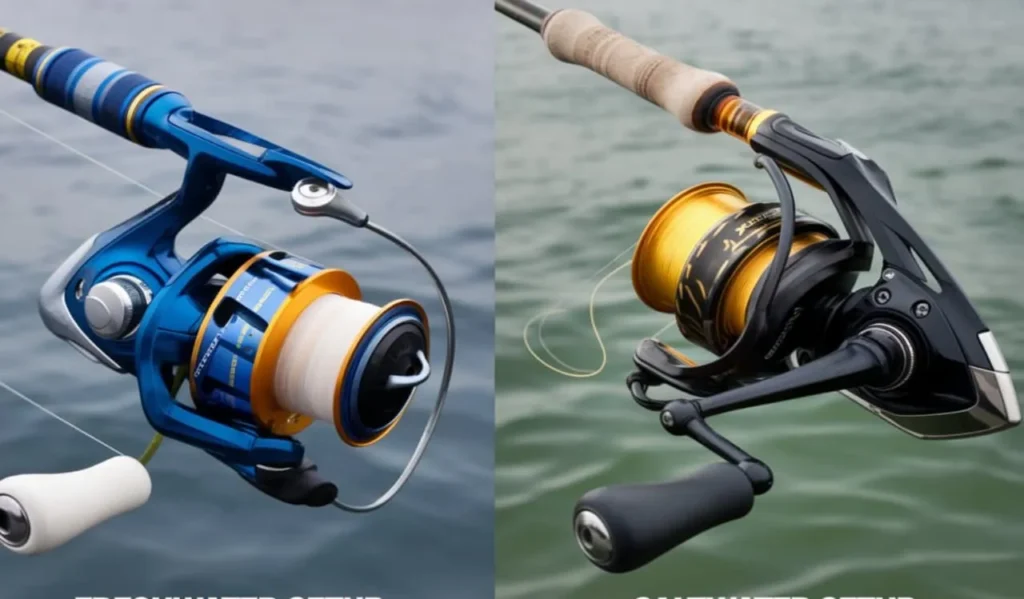
Freshwater reel is developed to be used in lakes, rivers, ponds, and streams that have no salt exposure. Such reels emphasize on easy handling, lightweight and smooth running. They are normally applied on bass, trout, panfish and catfish. Freshwater reels focus on the distance of casting, sensitivity, and comfort to spend long days with the light to medium fishing pressure.
Graphite frames, aluminum spools, and regular steel bearings are the common materials used to make freshwater reels. They do not need heavy sealing and anti-corrosive coating. They are lightweight and thus cause less fatigue when casting repeatedly. These reels have applications in finesse fishing, ultralight rigs and in recreational fishing where one does not need high strength and salt resistance.
What Is a Saltwater Reel?
Salt water reel is engineered to endure the rough sea conditions that are full of salt, wet waters and large fish. These reels have corrosion free materials, sealed bearings, and strong frames. Inshore, offshore, and deep-sea fishing are some of the common uses of salt water reels. They deal with such heavy species like tuna, tarpon, snapper, and kingfish.
Must-Read Guide for Top Picks of Best Fishing Reels
Saltwater reels have anodized aluminum bodies, stainless steel parts and rust resistance paint. High level of sealing helps in the prevention of salt penetration into gears and drag systems. These reels also offer increased drag pressure and capacity of lines. Saltwater reels are more heavy than freshwater reels but offer better durability and power required in aggressive fish and harsh ocean environment.
Material and Construction Differences
Freshwater reels give more emphasis on light weight and affordability in their construction. Frames are usually made of graphite, and the lightweight aluminum parts. These materials are comfortable, easy to handle and acceptable in non-corrosive environments. The construction of freshwater reels is optimized on a round rotation and balance as opposed to long-lasting resistance to salt, pressure, or extreme environmental abuse.
Saltwater reels are made of high grade aluminum, stainless steel and sealed internal parts. They are built in a manner that emphasizes on rust prevention, impact strength and durability. Additional gaskets and sealed systems are used to guard the internal gears against the damage by salt water. These are heavier materials that make reels last longer in harsh environments but given their added weight that is noticeable to freshwater reel designs.
Drag System Comparison
Freshwater reels have smooth yet moderate drag systems which can be used on light to medium sized fish. Their drag can handle sudden runs successfully but is not designed to work under huge pressure. Freshwater species do not normally demand very high drag power. In these drag systems, smoothness is of the foremost consideration, avoiding breakage of the lines, but retaining control in short to medium combats.
Salt reel drag systems are constructed of extreme pressure and long run fish. These reels can be used in the most straining conditions with carbon fiber washers, sealed drag stacks, and heat-resistant materials. High velocity drag is necessary to manage fast pelagic fish which are long and aggressive in their runs. Saltwater drags are made to be consistent when fighting on long battles.
Corrosion Resistance
The fresh water reels do not need much corrosion protection due to the fact that they will be used in non-salty areas. Light paint and normal lubrication normally suffices in avoiding rust. Maintenance of use After use Wipe off moisture, occasionally oil. Although freshwater reels are well suited to the environment they are supposed to function in, they are very susceptible to destruction in the event that they come in contact with salt water.
Saltwater reels are constructed in a manner that they combat corrosion caused by salt. Rust resistant components include sealed bearings, anodized finishes, and stainless components. They are still to be rinsed after use, but the reels are able to withstand the extreme marine environment. The most significant aspect of the long term durability between saltwater and freshwater reels is corrosion resistance.
Strength and Power Differences
Freshwater reels are a medium-level strength, regulated fighting pressure reel. They are good predators of species such as bass, trout and walleye. These fish need gradual drag and moderate lift as opposed to superpower. The freshwater reels are sufficient in terms of torque and line capacity to meet the requirements of most inland fishing without undue weight or extravagant construction.
Reels used in salt waters should be able to deal with huge, swift, and powerful fish, which put pressure on them over a long time. They have the high gear strength, reinforced spools and massive drag capacity. These reels manage huge fish that have the ability to strip hundreds of yards of line in a short period of time. The power is essential to avoid the reel breakage in the event of offshore and deep-sea fishing.
Weight and Comfort
The reel made of freshwater is lighter and easier to cast repeatedly. This is because they are lightweight and thus they do not get fatigued when they are engaged in prolonged fishing activities. Fishermen fishing finesse species enjoy easy control and handling. Sensitivity and casting efficiency are enhanced through lightweight design. Freshwater reels are perfect when used continuously on shore, boats or kayaks.
Saltwater reels are heavier as they are made to be sturdier and corrosion proof. The extra weight enhances stability in the heavy fights but may be fatigating in the long run. Saltwater fishing is normally done with boats or by fishing rods holder, which minimizes the strain of handling. The strength and reliability demanded in the marine environment is tolerated at the expense of weight.
Reel Size and Line Capacity
Freshwater reels tend to be of smaller spool size and low line capacity. These are aimed at short or medium casting range and regulated battles. Smaller spools make the reel less weight and enhance casting. The fresh water fishing does not entail very long runs of the line, so the reels can be of rather small sizes and weight.
Salt water reels come with larger spools having immense lines to accommodate long and strong runs. In a few seconds, offshore species are able to strip hundreds of yards of line. Big capacity spools can not be spooled in battle. Saltwater reels are designed with deep-water fishing, trolling as well as high-speed predators which require long lines.
Best Fishing Applications
Ponds, lakes, rivers and reservoirs are the most suitable areas of freshwater reels. They are spinning, baitcasting, and spincast. Such reels are suitable in fishing bass, trout fishing, panfish, and recreational fishing. Freshwater reels are great in terms of performance with casual and competitive fishing in the inland water bodies.
Must-Read Guide for Anyone Looking for Top Rods
The saltwater reels are meant to be used in inland bays and coastal waters, offshore platform, and deep-sea fishing. They are good trollers, jiggers, bottom fishers and live baiters. Saltwater reels are also necessary in hunting giant ocean predators. They are built in such a way that they can be used repeatedly even when there is high tension, they are exposed to salt and during prolonged battles.
Which Reel Should You Choose
Select a fresh water reel when you are only going to fish lakes, rivers, and ponds. These reels are comfortable, easy to cast and strong enough to use in inland species. They are portable, cheap and simple to service. To most leisure users, freshwater reels provide good performance without any heavy-duty or extreme drag performance.
Select a saltwater reel in case you are fishing in the coastal or offshore settings. These reels are resistant to corrosion, offer strong drag mechanisms and deal with tough fish. They weigh more and cost more yet are necessary in long-term conditions in the sea. The choice of the right reel will be safe, effective and give confidence when aiming at large ocean fish.
Why Trust Us
We have made comparisons of our reels by practical testing in fresh water lakes and saltwater. We analyze the corrosion strength, drag force, casting capability and durability over time. The conditions in our reviews are the fishing abuse conditions, not the conditions in the showrooms. We are concerned with the practical performance that the angler really carries through in the daily usage.
We also examine the feedback of amateur and professional fishers in the various styles of fishing. It will enable us to integrate actual performance outcomes with technical performance data. Our mission is to deliver a sincere and unbiased reel advice that enables the angler to avoid making expensive mistakes and to choose to use equipment that suits well in the particular environment of the fishery.
Customer Feedback
Lightweight comfort, easy casting, and handling are also applauded by the users of reel in fresh water. Novices have been known to improve quickly when using fresh water reels on bass and trout. Anglers experience less fatigue when they cast a long distance. The customers like low prices and reliable performance to recreational purposes on the lakes, rivers, and in the still freshwater environments.
The saltwater reel users emphasize on powerful drag, solid construction and resistance to corrosion. Tuna, kingfish and tarpon are successful with offshore anglers. Under extreme pressure, customers will always appreciate durability and reliability. Numerous people accept the fact that saltwater reel is worth the increased price because of the long duration and the regular work of the reel in severe marine environments.
FAQs About Freshwater Reel vs Saltwater Reel
Final Thoughts
The reels of freshwater and saltwater are constructed in entirely different environments. Fresh water reels emphasize on comfort, lightweight, and affordability. They are ideal with inland species and recreational fishing. Their use in the saltwater without protection results in rapid corrosion and shorter life as they are not sealed and contain no materials that prevent rust.
Salt water reels are concerned with strength, corrosion and durability in the face of extreme pressure. Their presence is important in ocean fishing where strong species and salt exposure is always an issue. Selecting the appropriate reel will not only help in protecting your investment but also enhance the performance of your fishing and help in providing safety and success in your desired fishing environment on any given occasion.