Kayak Fishing Guide for Beginners: Best Tips, Gear and Techniques
Kayak fishing guide with kayak selection, rods, reels, lines, accessories, safety gear, anchoring, tackle organization, and beginner tips.
Kayak fishing is a fast, economical and very efficient method of reaching fishing waters without making a noise. It enables the fishermen to access shallow waters, narrow passages, and concealed places which the larger boats can not access. A well-built kayak fishing system enhances stability, accuracy in casting, storage control, and general safety with retaining complete control in freshwater and saltwater.
When establishing a kayak with the aim of fishing, one has to be careful about the arrangement of equipment, safety gears and comforts. There is a lack of space and weight balance is important, unlike in traditional boats. It is an efficiently organized arrangement that makes the long journeys more efficient and less fatigued. Kayak fishing is one of the most productive and enjoyable fishing techniques that can be used.
What Is Kayak Fishing?
Kayak fishing is a method of fishing in a small watercraft that is propelled by paddles or pedals and is used due to its stability and maneuverability. Anglers utilise kayaks to creep into fish areas without spooking the fish. This technique works well in lakes, rivers, dams and coastal waters where stealth, shallow entry and movement is a significant fishing benefit compared to the traditional boat fishing.
Different Types of Fishing Rods and How to Use Each Rod
Kayak fishing is a combination of angling and physical activity and has a close attachment to the water environment. It enables the fishers to fish in small areas and shallow flats. Kayaks are cheap and clean since they need little maintenance and fuel. With the help of proper installation, a basic kayak is transformed into a full-fledged fishing platform.
Choosing the Right Fishing Kayak
The choice of the fishing kayak will be determined by the type of water, fishing mode and individual comfort. The most common kayaks used in fishing are sit-on-top kayaks as they have great stability, open storage and easy drainage of water. Sit-inside kayaks are good against cold conditions and limited to movement and access to gear in the active fishing conditions.
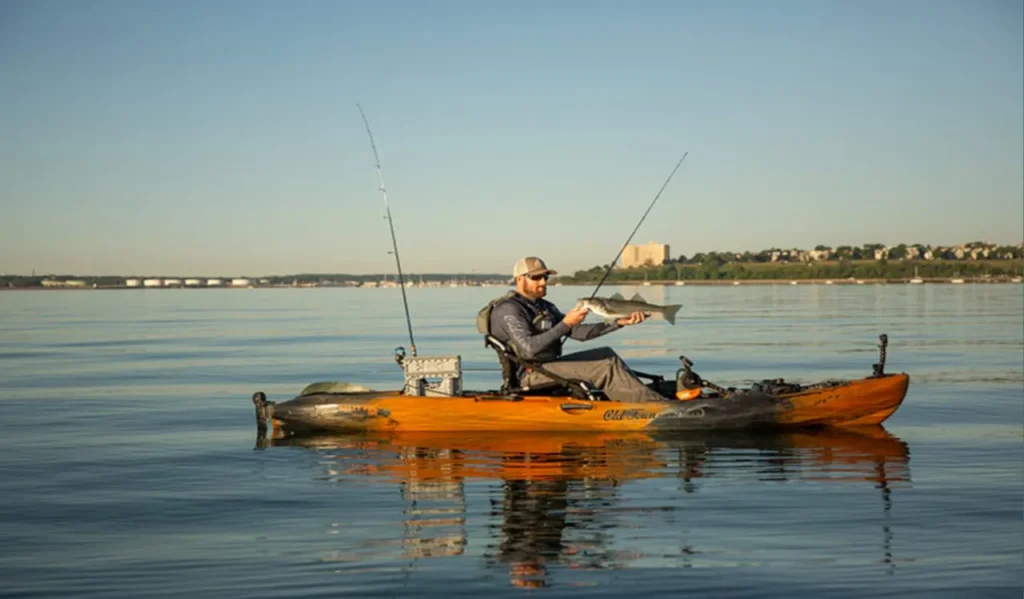
The length of the kayak influences the speed and tracking whereas the width influences the balance and stability. The bigger kayaks provide a greater standing stability and are slower. The longer kayaks are used in open water. Weight capacity should be able to take angler weight and gear. The proper selection of the hull design will guarantee safe performance under various water and fishing conditions.
Kayak Fishing Rod and Reel Setup
Fishing rods used in kayak fishing are supposed to be small, tough and species-specific. Most of the kayak fishing scenarios can be good with medium-light to medium-heavy rods. The shorter rods are easier to control in a narrow space whereas the longer rods are used in open water where the casting distance is far. The spinning reels are most favored because they are easy to use and lightweight.
A reel and rod rig will minimize the fatigue of the arms after lengthy paddling. The saltwater kayak fishing requires corrosion resistant reels. Drag smoothness is also important since fish have the tendency of running at full speed near the kayak. The correct position of the rods avoids entanglements and provides easy retrieval in instances where the fish attack abruptly around the kayak.
Fishing Lines and Leaders for Kayak Fishing
The most common lines used in kayak fishing are monofilament, braided and fluorocarbon depending on the clarity of the water and fishing method. Monofilament provides shock absorbing and simplicity to the novices. Braided line is better in deep water and structure fishing in terms of sensitivity and strength. Leaders with fluorocarbon enhance stealthiness and abrasion resistance in and around docks, rocks and vegetation.
Must-Read Guide for Anyone Looking for Top Rods
The stability of kayaks and target fish size should be matched by line strength. The lighter lines will decrease resistance and better presentation of the lure and the heavier lines will give control around heavy cover. Knot tying is also essential since fish will attack at a close distance. The appropriate line is better to use to enhance hook-up ratios and to avoid unexpected break-offs.
Essential Kayak Fishing Accessories
The rod holders, paddle leashes, anchor systems, and storage crates are some of the important kayak fishing accessories. Rod holders release paddling and fish handling hands. Paddle leashes ensure that one does not lose control when struck suddenly. Anchor systems enable the angler to stabilize in the wind or current to be able to present the bait in the most productive areas.
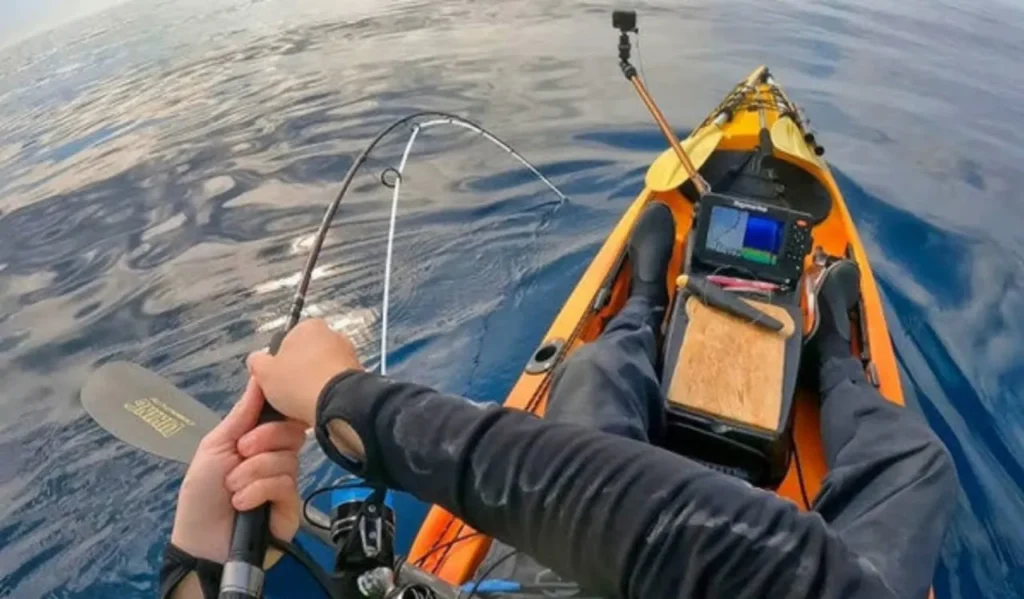
Tackle boxes, tools and safety equipment is stored in storage crates behind the seat. The fish finders enhance depth and structure. Landing nets and lip grips aid in ensuring that fish are safely landed without tipping the kayak. It enables efficient, safe and movement through that small kayak platform by putting accessories in the correct places.
Kayak Fishing Safety Setup
The most significant element of kayak fishing set-up is safety. A life jacket should be put on at all times when one is on the water. Emergency communication is achievable through whistles, signaling lights and waterproof communication devices. The paddle float systems assist in returning to the kayak after they accidentally capsized in deep water.
Kayaks have anchors and drift socks, which maneuver them in the wind and water. Quick response is offered in the form of first aid kits and line cutters to injury or entanglement. Use of visibility flags enhances safety where there is boat traffic during fishing. A full safety system enables an angler to fish with a lot of confidence and reduce chances of risk in fluctuating water conditions.
Kayak Fishing Tackle Organization
The space is taken full advantage of and cluttering is avoided by efficient tackle organization in kayak fishing trips. Small tackle boxes with dividable partitions are the most suitable in storing fishing lures, hooks, weights, and terminal tackle. By carrying only the necessary equipment, one can save on weight and enhance kayak stability when there is active fishing, as it can be easily accessed.
Must-Read Guide for Top Picks of Best Fishing Reels
The seat has crates at the back that can be used as vertical storage and as mounting tools. Front deck storage should be done in soft bags. Measuring boards, tools such as pliers, cutters, etc, should have tethers. Proper organization will help in avoiding the loss of the gear, less set up time and the efficiency and productivity of the kayak fishing.
Kayak Fishing Anchoring and Positioning
Kayak fishing anchoring systems enable recovering of the productive spots without drifting by keeping the angler over the spot. The stake-out poles are effective in the shallow water, as they keep the kayak staked to the bottom. Anchor trolleys can be used to position the anchors either at the bow or the stern in a controlled way to enhance the alignment with the wind and the current.
Drift socks retard motion in windy weather and offer smooth managed drifts across structure. Accurate positioning enhances accuracy in the presentation of lure and the chance of bites. Proper use of anchors will ensure that there is no spinning of kayaks in fish battles. Learning to position the kayak increases the efficiency of fishing and stability significantly as one aims at feeding fish at all times.
Common Kayak Fishing Setup Mistakes
The other typical error in kayak fishing gear is putting too much unnecessary equipment into the kayak making it unstable and prone to capsizing. Distribution of weight is poor resulting in awkward handling and inefficient paddling. The second error is the failure to lock up rods and tools and as a result, they lose their equipments when there is a sudden movement or fish strike.
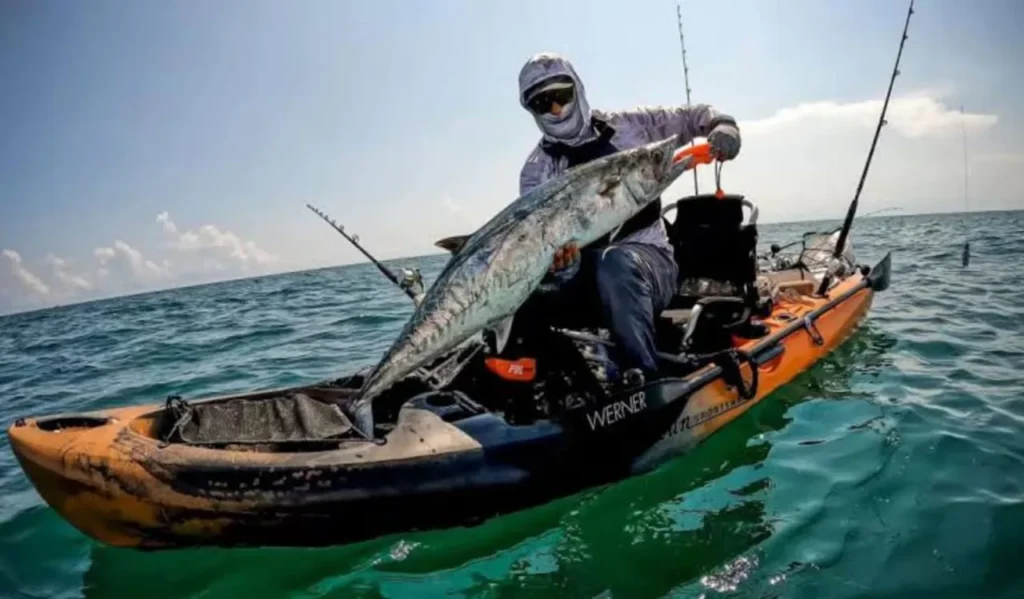
Most of the anglers are not keen on safety gears and feel that they are safe because of the calm weather. A kayak can be turned upside down in the heavy current due to improper placement of the anchor. Neglect of weather forecasts is also dangerous. The proper fix of these set up errors enhances balance, safety, comfort, and the overall success of kayak fishing regardless of the water conditions.
Kayak Fishing Setup for Beginners
A simple and lightweight kayak fishing outfit should be the starting point of the beginners. Sit-on-top kayak, one or two rods, small tackle box and simple safety equipment are all that is required to start. The minimal nature of the setup enhances the level of confidence, balance and maneuverability when learning the ropes in the water at the initial stages.
Novices should concentrate on the paddle control, balance and simple casting. It is necessary to learn how to get back into the kayak once in the water to be safe. The addition of accessories with the increase of experience avoids confusion and clutters. By consistent practice the novice learns within a short period to handle the kayak and the fishing business simultaneously.
FAQs About Kayak Fishing Guide
Final Thoughts
Kayak fishing experience is the incomparable access to the hidden waters, shallow flats, and narrow channels that cannot be accessed by larger boats. By the right installation, the angler will have stability, easy access to gear, and a higher level of safety. A well-equipped kayak is an effective fishing boat that can fight freshwater bass down to inshore saltwater predators.
Kayak fishing is simple in design, though, and it is a good idea to plan and organize carefully. Minor positioning of the rod, anchoring and storage of the tackle significantly enhance performance. Safety is the paramount factor and gradual upgrades in the setting up of kayak fishing make it one of the most thrilling, cheap, and satisfying fishing forms in the present world.