How to Spool Line On a Baitcasting Reel: Complete Guide
Learn how to spool line on a baitcasting reel. Step-by-step tips for proper tension, even line distribution, and smooth, tangle-free casting performance.
To cast with ease, avoid backlash and get the greatest performance, it is important to spool line on a baitcasting reel in the proper order. Correct line installation is a way of achieving even tension, lessening tangles, and better lure control. Learning how to use techniques, types of lines and mechanics of the fishing reel enables the angler to get efficient spooling. Learning this art improves fishing and raises the accuracy as well as a sure system of freshwater and saltwater fishing.
Improper spooling may cause twisting of lines, tangling and decrease in casting distance. Equal distribution of line on the spool is important in the prevention of the backlash and enhancement of control. Correct spooling of line leads to an easy working process, gear protection and enables an angler to fish effectively and comfortably in various fishing conditions and environments.
Understanding Baitcasting Reel Mechanics
Baitcasting reels are reels whose spool is revolving as the line is cast and recovered. The spooling should be properly done so that the line does not tangle or run over. It is important to know the spool mechanics, braking mechanisms and tension variations. Knowledge of how to use a reel enables an angler to attach a line properly, to exercise control over a line when making a cast, and to avoid frustration when fishing in a freshwater or salt lake.
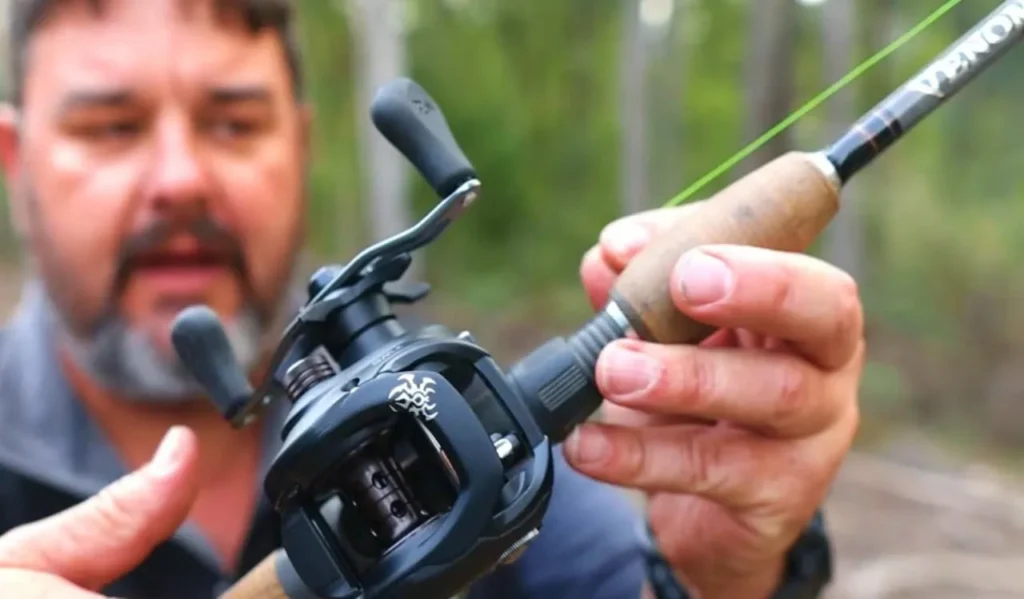
The smooth rotation of the spool is based on distribution and tension of the lines. Loose or uneven line also raises the risk of backlash and decreases the accuracy of the casting. Reel mechanism knowledge enhances the control of the line, accuracy of casting, and prevents the damage of the reel and line, which makes baitcasting reels more effective among the novice and the professional angler.
Choosing the Right Line
The casting performance, distance and control are influenced by line choice. Monofilament is beginner friendly, fluorocarbon is less noticeable in water and braided line is powerful and has low stretch. Choose line type and pound-test based on target species, fishing lure weight and reel size. Effective spooling and decreased tangles or line breakage is a result of proper selection.
Line diameter is correct and does not over fill or have uneven layering due to compatibility with the reel. Thin lines will be more capacity and flow with less difficulty whereas thicker lines are more robust but need a great deal of tension. The selection of the appropriate line enhances the effectiveness of casting, accuracy, and the general performance of baitcasting reel when an individual goes fishing.
Must-Read Guide for Anyone Looking for Top Rods
Preparing the Reel and Line
Prior to spooling, clean the reel, inspect it to determine whether it is worn out and make sure the spool is clear of debris. Nick the end of the line and make sure that it is firmly attached to the spool with an arbor knot. Install the reel correctly, keep the tension constant and test the spool to ensure that it rotates freely. The preparation provides even distribution of lines and avoids problems when casting.
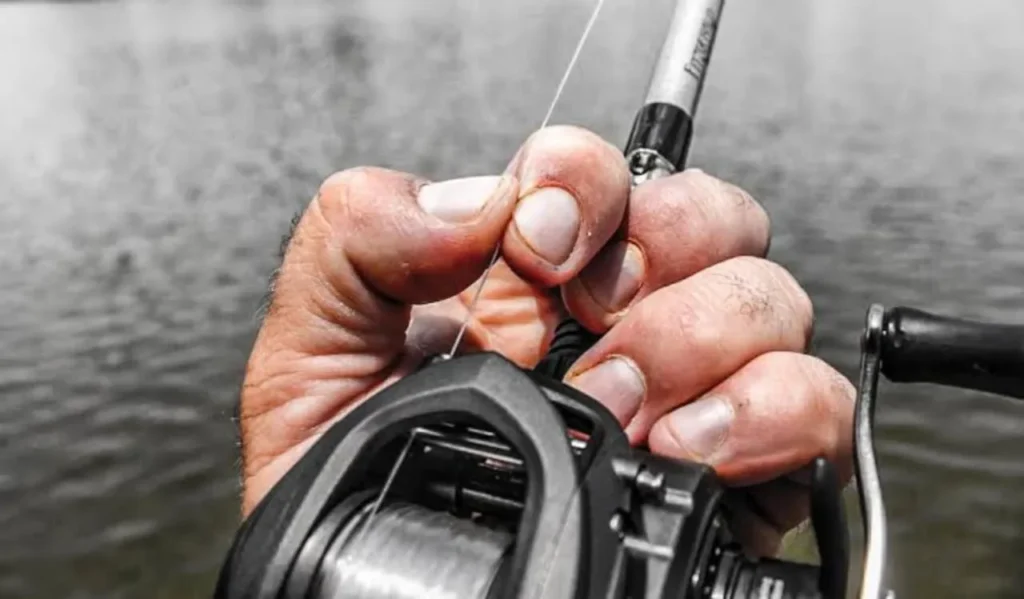
Fix the fishing reel to the fishing rod in order to keep it steady. Also make sure that the line spool is positioned in the correct manner so that it turns in the same direction as the reel spool. Twists, tangles and inefficient spooling can be avoided by proper preparation. Proper rigging ensures that casts are made easily and in a controlled manner and makes fishing more effective.
Spooling Line On the Reel
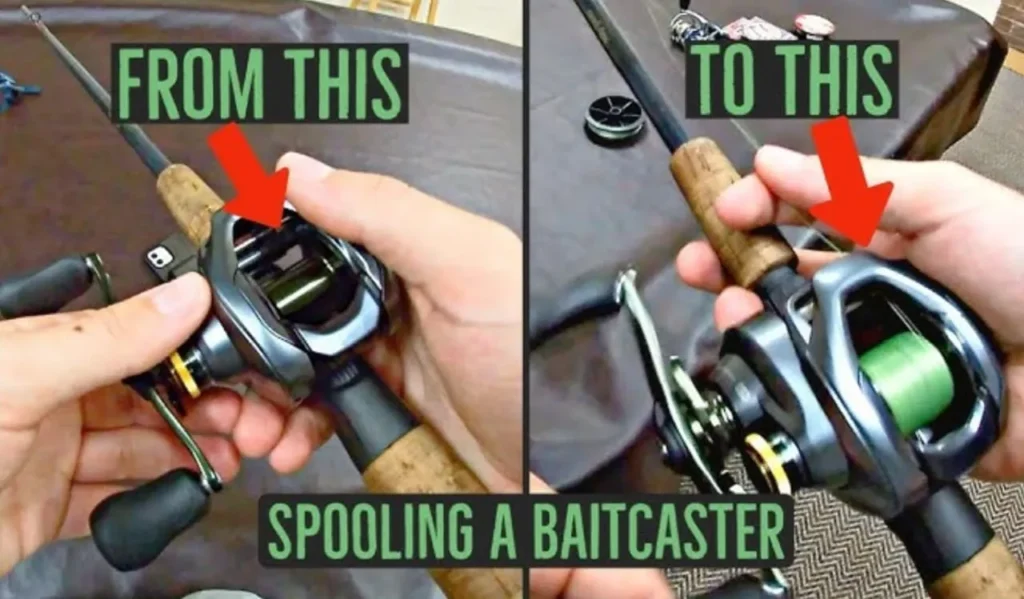
Start by connecting the line to the spool with a knot that is secure. Close the handle of the reel and keep the reel tensioned and continue to wind the line evenly on the reel. Turn the reel slowly so that there is no overlapping of layers. Keep spooling until the reel is full approximately 1/8 inch below the spool lip and then it is optimum spooling and minimum backlash.
Always have a steady tension in the process. Do not overfill because this will cause the risk of backlash and do not underfill because this will decrease the casting distance. Smooth line release, better casting control, and increased performance in either freshwater or salt water fishing is made possible by proper spooling. Proper operation ensures that the line and reel last longer and avoids the tangles.
Must-Read Guide for Top Picks of Best Fishing Reels
Choosing the Right Line
Spoil tension helps to eliminate line overruns and backlash. Regulate tension knob, according to weight of lure and type of line and conditions of casting. The heavier lures need to be loosely tensioned and the lighter lures need to be tightly controlled. Test with short casts in order to make sure that settings are correct. Proper tension enhances accuracy of casting, minimizes tangle and ensures steady line flow.
It is necessary to fine-tune spool tension. Will have to cast slowly so as not to start off at a loss. The correct tension would guarantee the constant rotation of the spool, which would provide a good delivery of the lure and a uniform work on the fishing trip, no matter how heavy the lure is and what the weather conditions are.
Preparing the Reel and Line
Even distribution of lines eliminates entangles and improves the control of casting. Finger follow the line over the spool making no overlap. Apply layer in the crisscross or parallel way. The irregular spooling is a risk of backlash and lower efficiency of the casting. Correct distribution will provide ease of retrieval, accurate casts and maximum efficiency when fishing in either freshwater or salt water.
Spooling Monitor line buildup. The tension and knots are avoided by proper layering of line. Even distribution will enable the easy release of lines, increase the control of the lures and reduce the chances of frustration due to tangles. Proper technique in spooling guarantees that the reel works effectively and the length of the line is prolonged.
Different Types of Fishing Rods and How to Use Each Rod
Spooling Line On the Reel
Upon spooling, check whether it has twists, loops or loose areas. Test casting Run line through guides. Fix any problem with re-spooling or tightening. Twisted or looped lines decrease the casting range, enhance backlash and can lead to line breakage. The consistency and smoothness of the line enhances reliability and efficiency in the course of fishing.
The twists may be due to orientation of spool or loose tension. Use prevent loops, when spooling, ensure that the line is taut. Problems that are gone over will guarantee improved control of casting, eliminate any tangles, and improve overall functionality, which will give the fishing experience with baitcasting reels a smoother and enjoyable experience.
Testing Spooled Line
After the reel has been spooled, practice with it. Look at easy line discharge, good rotation of the spool and no tangles. Adjust tension or distribution (in small steps). The testing provides the best setup, enhances the efficiency of casting and instills confidence that will equip the angler with the winning freshwater and saltwater fishing experience.
Note as far as casting, precision, and fluidity. Tilter drag, spool tension or line position in case of problems. The testing gives the feedback of how to refine the line to work correctly, the reel is working properly, and the angler is able to cast effectively without any backlash or tangles.
FAQs About Spool Line On a Baitcasting Reel
Final Thoughts
The proper method of spooling line on a baitcasting reel is essential in casting without any problems, as well as casting in a controlled manner and reducing backlash. The correct methods, tension control and even distribution of lines guarantee the best performance. Spoiling is more efficient, better in the presentation of lures and enables the angler to fish with certainty in freshwater or a saltwater setting.
Skill and confidence are developed through constant practice and preparation, as well as trial and error. Properly spooled, properly distributed lines, and proper attention to detail make sure that the reel and line operate smoothly, reduce tangles and increase the life of the reel and line. Proper spooling improves casting accuracy, range and general fishing success both to the novice and the experienced angler.