Ultimate Trolling Fishing Guide: Catch More Fish While Moving
Trolling fishing guide with rods, reels, speed control, depth tips, lures, safety advice, and beginner guidance for freshwater and saltwater success.
Trolling is a common practice in fishing in which the fisherman drags bait or lures into the water with a slow moving boat. This technique enables the fishermen to fishing in a big water body and hunt active predatory fish. Trolling is a common practice in fresh water lakes, rivers and the open ocean. It is particularly useful when the species are chases and are aggressive.
Trolling fishing is favored by many novices due to its ease of casting and the fact that it provides action. Trolling is very productive with an appropriate choice of lures, the control of the boat speed, and the depth. Anglers have the ability to fish in various depths and fish areas effectively. This way enhances the success because it lays lures into the feeding paths of roaming predatory fish.
What Is Trolling Fishing?
Trolling fishing is a type of fishing in which bait or artificial lures are pulled behind a moving boat at regulated speeds. The movement of the boat also gives the boat realistic swimming which attracts predatory fish. Anglers vary the depth of the lure with the line length, weights or diving equipment to access the preferred strike zone where fish actively forage.
Such species as salmon, trout, walleye, tuna, and marlin are usually prepared by this method. Trolling may be in fresh water and salt water. It enables the fishers to cover extensive regions. The angler can cause fish to strike aggressively by regulating speed, depth and the movement of the lure, which attracts fast moving prey.
Trolling Fishing Rods and Reels
Trolling fishing rods are manufactured to be strong and durable since the fishing rods are at constant tensions with the deployment of the lines. These rods are harder than casting rods and are meant to get deep running lures, and heavy sinkers. The length and power are determined by the target species and water depth to fish in trolling.
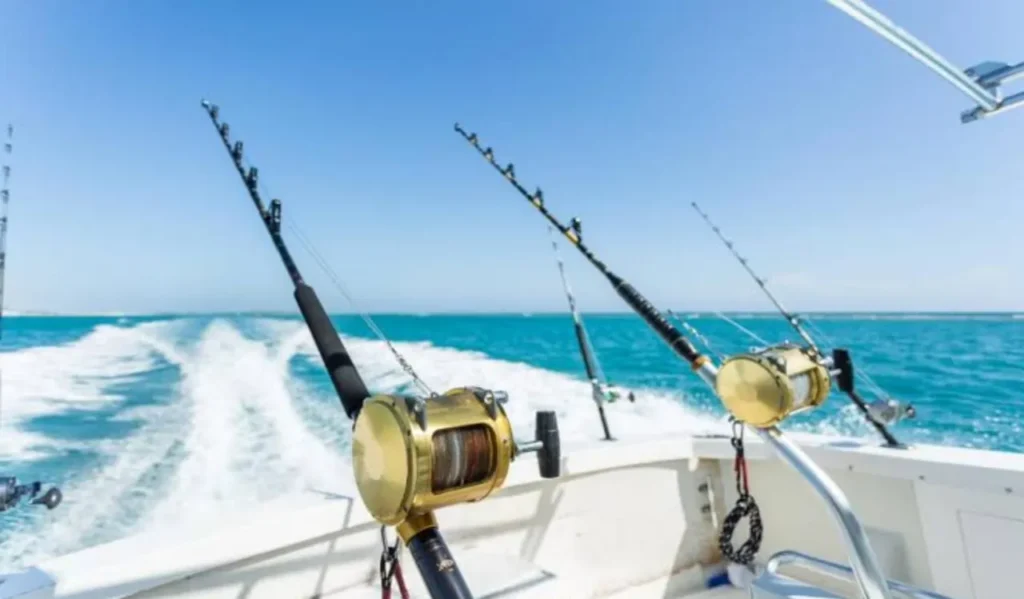
Trolling reels are either traditional reels with high drag systems and high line capacity. They have the ability to control line release and depth positioning. Even drag eliminates the breakage of lines in case of sudden hits. They have to be made of corrosion-resistant materials, particularly in saltwater trolling when the equipment is subjected to severe ocean conditions.
Fishing Line Used for Trolling
Trolling fishing depends on the choice of the fishing line. Braided line is mostly employed because it has a small diameter, low stretch and high sensitivity. It enables the angler to get down to deeper water with less line and detect delicate strikes even at a long distance behind the boat.
Must-Read Guide for Anyone Looking for Top Rods
Trolling is also done using monofilament line since this line is stretchy and absorbs the shock when a violent strike is made. Invisible and abrasion-resistant fluorocarbon leaders are added near the lure. Adequate line strength averts the break-offs in a fast running. The proper line selection will guarantee constant lure behavior and consistent hook-setting strength when trolling fishing.
Best Lures and Baits for Trolling
Artificial lures as well as natural baits can be used in trolling fishing depending on the target species. Crankbaits, spoons, diving plugs, and spinner rigs are some of the common trolling lures. These traps mimic wounded fish and generate vibration and flash that attracts predators at a great distance in the water.
Live fish, cut bait or strip baits are also popular and popularly used in saltwater trolling. Smell is an important aspect of precipitation of strikes. The success rates are improved by matching the lure size, color and action with the local forage. New bait and sharp hooks are very effective in increasing percentages of hook-up.
Trolling Speed and Depth Control
The rate of trolling has a direct impact on the lure action and strike frequency. The slow speed works well with cold-water species whereas the rapid speed provokes reaction strikes by aggressive predators. Every lure has an optimal range of speeds, which is used to create a natural movement of swimming. Passing this range will result in unnatural action which lowers the rates of strike.
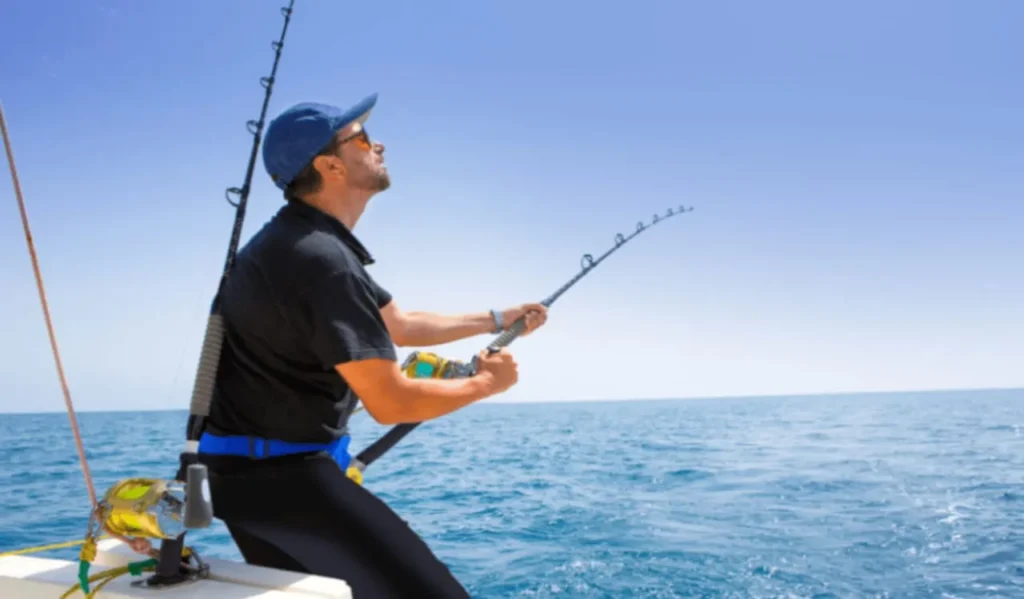
Line line, weighted rigs, diving planers or downriggers are used to gain depth. Fish tend to hang at a certain level depending on the temperature and availability of bait. The correct placement of depth means that lures stay longer in the feeding area. Learning to control speed and depth level will significantly increase the productivity and the consistency of the catches in general trolling.
Freshwater Trolling Fishing
Trolling Freshwater trolling is common in lakes and great rivers to fish trout, walleye, pike, and bass. To reach large bodies of water, the crankbaits, spoons, and spinner rigs are used by the anglers. Trolling enables the angler to find fish at different levels in depths and beneath the underwater formations. The success of freshwater trolling is highly affected by season patterns.
Must-Read Guide for Top Picks of Best Fishing Reels
During hot weather, fish go deeper and in cold weather they go closer to the surface. The changes of temperature and the movement of baitfish are used to locate the active fish. Trolling on freshwater provides a novice with a simple way to get into boat fishing, and it also offers them an exciting experience in fighting the powerful freshwater predators.
Saltwater Trolling Fishing
Saltwater trolling is used to attack heavy fish out in the oceans like tuna, mahi-mahi, marlin, kingfish and wahoo. The speed of boats varies according to species behavior and the conditions of the water. Skirts, rigged baits, and huge lures are dragged behind the boat to resemble fast moving baitfish in open water.
This kind of trolling involves the use of powerful equipment because of the size and power of the saltwater fish. Fights and fast running are prevalent. The navigation devices are used to identify temperature breaks and bait schools. Trolling in salt water is a very exciting activity that is generally linked to trophy fish and deep-sea fishing.
Safety Tips for Trolling Fishing
Trolling fishing safety is very crucial as the fishermen always have to deal with moving boats and lines. Storing decks off the floor is a way of eliminating tripping. Every angler must wear life jackets particularly when there is rough water. Weather predicting will prevent the occurrence of unexpected storms that may lead to unsafe boating.
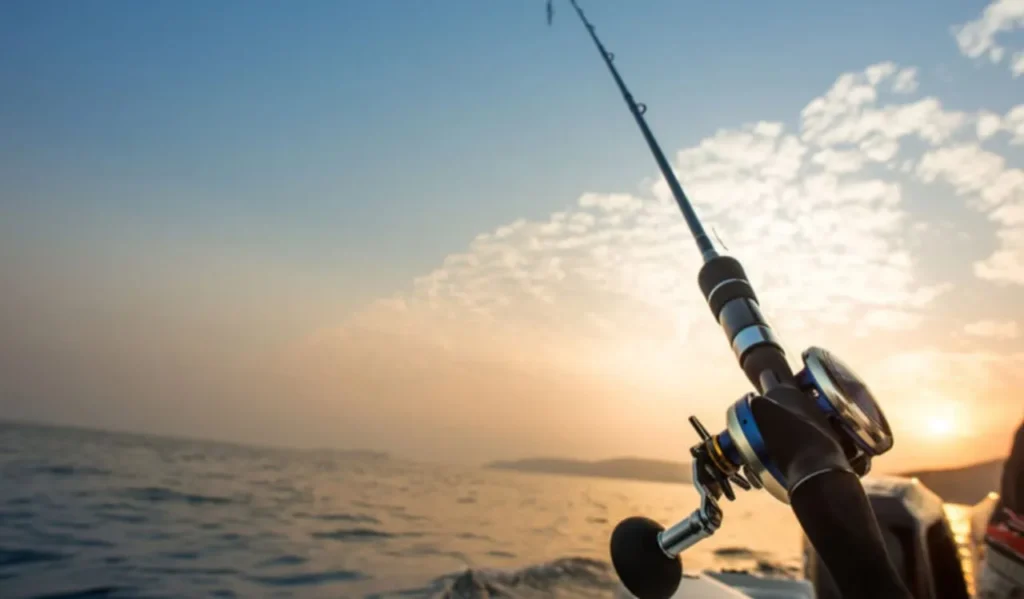
Holders are used to ensure that the rods do not tangle accidentally and fall overboard. Sharp hooks must be handled when they are being deployed and when they are being retrieved. The emergency line cutting should always have good access to knives. Adherence to boating rules and communication devices will make the trolling fishing activity safe and controlled.
Common Trolling Fishing Mistakes
The most common mistake made by beginners is to troll either too fast or too slow, which destroys a good lure action. Strikes are also minimized by use of wrong lure sizes. The inability to control depth will send lures out of active feeding areas. Tangled lines can be as a result of improper placing of the rods or abrupt sharp turns of the boat.
Different Types of Fishing Rods and How to Use Each Rod
The other type of error is ignorance of seasonal fish movement and water temperature variation. Listless knots and heavily hooked hooks mean dead fish. Sudden line breaks happen due to poor adjustment of the drag. When these errors are avoided, hook-up rates will be enhanced tremendously. Proper method, regular supervision and equipments enhance the efficiency and success of trolling fishing.
Trolling Fishing for Beginners
One of the simplest techniques that can be learnt by beginners is trolling fishing as it does not demand a lot of casting. Novice fishermen can be preoccupied with their choice of lures, speed of the boat, and depth control, whereas advanced fishermen are in charge of navigation. Simple crankbaits and moderate trolling speeds are a good place to begin with, and confidence is created speedily.
It is better to understand how to read sonar to know where fish are. Novices need to make presentations basic and slowly experiment with depth and types of lures. One should be patient since strikes might be time consuming. Beginners can soon be availing of constant action and thrilling hits with trolling fishing and proper set up.
FAQs About Trolling Fishing Guide
Final Thoughts
Trolling fishing is a good and thrilling technique that enables the fishers to cover large bodies of water and fish predatory fish in action. The speed of the boat, depth of the lure, and how it is presented are three factors that allow the fisherman to raise their odds by a significant margin. It is all-purpose, effective, and can be used in fresh water as well as salty conditions all over the world.
Even though it is easy to master, trolling fishing encourages attention to detail and adaptation. Minor variations in depth, speed and the color of lures tend to have significant outcomes. Trolling is one of the surest methods of fishing powerful and aggressive fish species with the right gears, safe boating methods and regular monitoring.