How to Clean Fishing Gear After Saltwater Use: Ultimate Guide
Learn how to clean fishing gear after saltwater use to prevent corrosion, extend equipment life, and keep rods, reels, and tackle performing smoothly.
Saltwater fishing exposes equipment to salt, moisture and debris, which lead to corrosion with time. The crystals of salt are deposited on the rods, reels, guides and lures, undermining the metal and ruining moving components. Regular cleaning helps avoid rust, maintain performance and increase the equipment life. Maintenance lapses cause a decrease in the efficiency of casting, adhesive reels, and expensive repairs. The damage by saltwater usually begins on the inside where corrosion cannot be seen.
The ones that are most affected are reel bearings, drag systems and line rollers where the salt residue lingers. It is advisable to clean up after every trip to get rid of the deposits that are harmful before they solidify. Regular maintenance helps to preserve delicate parts and maintain gears in a good condition. Anglers who take care of equipment by cleaning them have an easier time retrieving them, fewer failures and more pleasant fishing times.
Rinsing Gear Immediately After Use
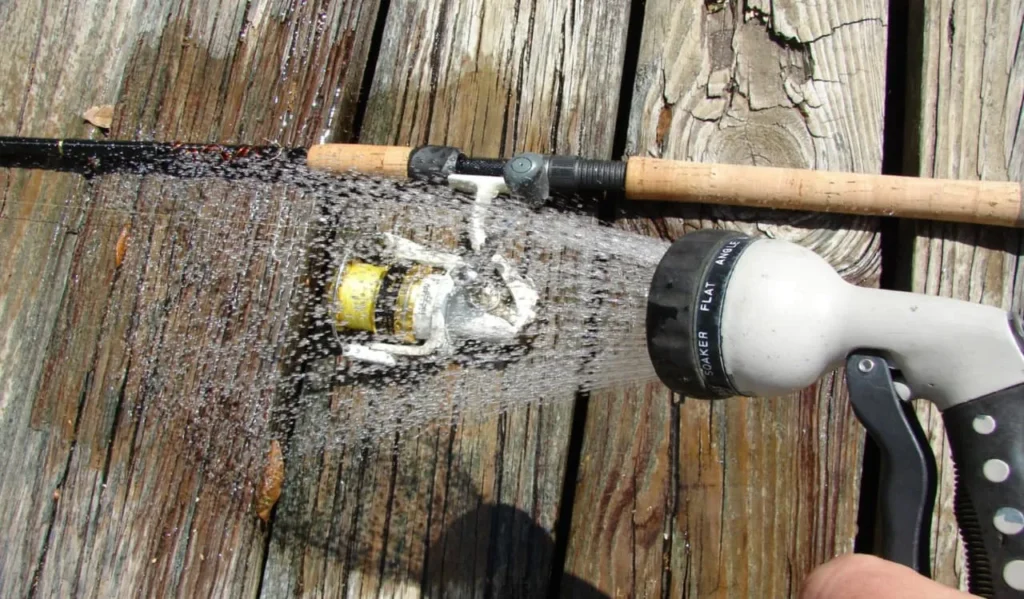
The most significant measure is to rinse fishing equipment immediately after being used in salty water. Freshwater eliminates salt deposits and it crystallized which led to corrosion. Low-pressure water should be used to ensure that the salt is not pressed further into reels or into the rod parts. A soft hose down lubricates rod guides, reel bodies, handle and lures. This fast measure will save long-term harm and equipments to clean in a more thorough way.
It is dangerous to immerse reels in water. Salt may be trapped in internal parts by submerging. Rather, spray surfaces lightly with reels in an upright position. After rinsing, remove all the moisture with a soft cloth. The method does not destroy seals or bearings. Rinsing will greatly decrease the risk of corrosion, preserve delicate components, and have fishing equipment ready and operational at the next saltwater fishing trip.
Must-Read Guide for Top Picks of Best Fishing Reels
How to clean Fishing Rods
Salt is gathered in fishing rods along guides, reel seats and grips. Wipe the rod blank with a damp cloth that has some mild soap. Be aware of guides where the salt accumulation is prevalent. Soft brushes can be used to clean hard to reach places without scratches. Wash in little water and dry thoroughly. Cleaning of the rod ensures the flow of the line is smooth, the guides are not corroded and the rods are not weakened.
Rods handles can not be forgotten. Cork handles absorb salt and moisture, and result in odor and wear. Clean grips with the help of a soft brush and light soap solution. Handles of EVA foam are easily wiped. Cleaning is completed and then rods are left to air dry before being stored. Routine maintenance of rods helps to avoid any breakdown of materials, enhances comfort and keep rods lightweight, durable and responsive to make subsequent saltwater fishing trips.
Must-Read Guide for Anyone Looking for Top Rods
Cleaning Spinning and Baitcasting Reels
Internal moving parts make reels the most susceptible to destruction by saltwater. Wipe the outside by first pouring freshwater over it. Wipe handles, spools and line rollers with a soft cloth/brush to eliminate salt. Direct pressure of water to openings is avoided. Wipe the reel dry after rinsing. This surface cleaning preserves the components and prevents corrosion of its formation in the internal mechanisms of the reels, which are delicate.
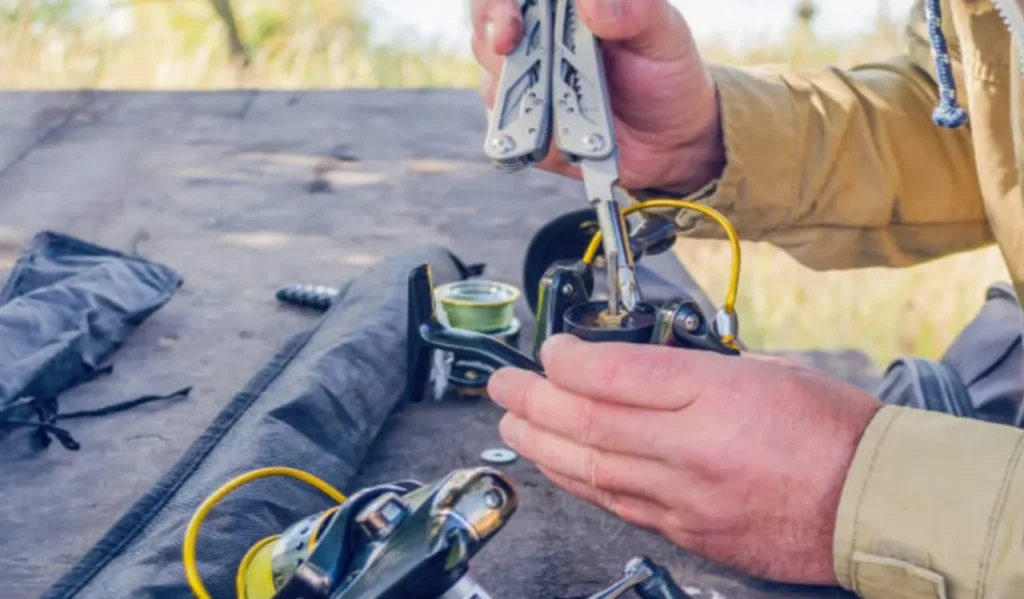
Sometimes more cleaning is required. Take off the spool and wipe the under part with a dry cloth. Oil moving parts lightly according to the instruction of the manufacturer. This does not mean that one should over-lubricate, since too much oil will attract dirt. Correct reel maintenance will guarantee easy drag operation, steady retrieves, and increase in the life span. Clean reels are more effective, have less friction and are reliable in such salt water fishing conditions all through the year.
Cleaning Fishing Line and Guides
Fishing line contains crystals of salt which makes it weaker with time. Rinse line after every trip, still on the spool. Turn slowly the reel handle as the fresh water passes over the line. This removes salt evenly. Afterwards wipe the line with a damp cloth. Proper line cleaning ensures that the line does not weaken, and friction is minimized and line failure will not occur easily during subsequent casts or battle with powerful fish.
Rod guides also need a lot of care. The accumulation of salt in the interior causes damage to the coating of lines and lessens the casting distance. Wipe guide rings with freshwater cotton swabs or soft brushes. Clean up and check whether there is corrosion or cracks. Guide maintenance means that the line flows well, the fishing line is safeguarded, and the casting is more precise and sensitive when fishing in the saltwater.
Different Types of Fishing Rods and How to Use Each Rod
Cleaning Lures and Terminal Tackle
When lures and terminal tackle are left in saltwater they soon become corroded. Wipe with fresh water hook, swivels, sinkers and lures. Removal of salt deposition in split rings and hook eyes should be done using a soft brush. Wipe down to dry the products after rinsing to avoid rust. Cleaning keeps the hooks sharp, avoids discolouration and increases the life of costly lures and terminal fishing accessories.
To provide extra protection, the light spraying of metal pieces with corrosion-inhibiting products that are used in fishing equipment may be considered. Heavy coating is to be avoided to draw dust. Keeping store lures away will be required to avoid moisture build-up. The maintenance of lures is done regularly so that hooks are sharp and parts are functioning. Clean terminal tackle is more effective, fewer fish lost, and less expensive since it does not need to be replaced as often as saltwater corrosive damaged ones.
Drying Gear Before Storage
It is also important to dry fishing equipment in a proper manner as cleaning. Wipe all the rods, reels and other accessories using a clean towel after rinsing. Let equipment dry in the shade, in an open space. Direct sunlight should be avoided and it may damage line and rod material. Full drying ensures that any moisture that may be trapped does not lead to internal corrosion, mould growth or bad smell with long time storage.
Never store gear while damp. Housing of reels, rod tubes or tackle boxes contain moisture that increases the rate of corrosion. Turn on bail arms and loosen drags to permit airflow. Proper drying ensures the protection of the inner parts and good functioning. Dry gear is dependable, longer lasting and is always available in the event of a sudden fishing trip in salt water.
Proper Storage After Cleaning
Adequate storage safeguards the cleaning equipment against the destruction of the environment. To avoid warping, store rods, either vertically or horizontally, on racks. Store reels in dry and cool places out of humidity. Add more coverings on the reel (reel covers or rod socks). The structured storage minimizes unintentional damage, ensures consistency, and ensures that the gear is kept clean between the trips. Proper storage implies an extension of the equipment life and maintenance of the performance season after season.
Tackle boxes are to be opened after some time to permit air to flow. Wipe the storage containers with moisture-absorbing packets to minimize moisture in the storage containers. Do not leave gear in cars, where there is an unstable temperature and moisture. Proper storage of equipment that has been cleaned will avoid the reoccurrence of corrosion and all the parts will be operational. Properly arranged storage is time-saving, investments are secured, and fishing equipment is always on the move.
Different Types of Fishing Reels and How to Use Each Reel
Common Cleaning Mistakes to Avoid
It is one of the errors that should be avoided when it comes to using high-pressure water on reels. This pushes salt to internal areas, which increases the speed of corrosion. The other error is the omission of drying after rinsing, which leaves moisture. Finishes and seals can be destroyed by using chemicals or household cleaners that are hard. These mistakes can be avoided to guarantee that cleaning activities do not harm equipment accidentally during a regular saltwater service.
Failure to undertake frequent cleaning is another significant error. Delaying will cause salt to harden and corrode metal components. Lubrication is also a problem that attracts dirt because it is improper. Regular cleaning practices will always save money that would be spent on maintenance. Knowing what not to do assists the angler to keep gear well maintained, make gear last longer and prevent performance problems related to poor saltwater cleaning habits.
Final Maintenance Tips for Saltwater Gear
Regularity is essential in the maintenance of salt water fishing equipment. Wash equipment at the end of each outing including the short ones. Cleaning should be done more frequently and equipment checked for corrosion. Replacement of damaged parts as soon as they are worn. Correct maintenance schedules will give a good performance, reliability, and long life span enabling the angler to concentrate on fishing instead of troubles with equipment.
Exercising maintenance will save money and increase the success of fishing. Wipe, dry, and put away equipment correctly after every salt water trip. Lubrication and servicing. Lubrication and servicing should be done according to the instructions of the manufacturer. Properly maintained equipment has a better cast, retrieves better and works the fish more efficiently. Saltwater fishing gears can be used in numerous successful seasons with proper care, and they are safe and reliable.
FAQs About How to Clean Fishing Gear
Final Thoughts
The reason why it is important to clean up fishing equipment used in salty water is to ensure you perform and preserve your investment. Salt residue readily leads to corrosion particularly in reels, guides and terminal tackle. Equipment is functioning well with regular rinsing, proper drying and storage. A regular cleaning program would save on expensive repairs and will also keep the rods, reels and accessories in check when next going on a saltwater fishing adventure.
Safety and fun on the water is enhanced by proper maintenance. Clean gear is more efficient in casting, fishing and retrieving as well as handling fish. Anglers can prevent the sudden failure of equipment by observing simple rules of cleaning them after every outing. The time spent in taking care of the saltwater fishing equipment is a guarantee that it will perform well, will incur minimal costs and will have several more productive fishing seasons to come.