How to Store Fishing Rods Properly: Ultimate Guide for Beginners
Learn how to store fishing rods properly to prevent damage, maintain sensitivity, and extend lifespan with tips on cleaning, racks and safe storage methods.
Fishing rods must be stored properly to maintain their performance, durability, and lifespan. Improper handling or storage can cause bent blanks, broken guides, and damaged handles. Both amateur and professional anglers need to understand correct storage methods to keep rods in good condition. Proper storage also prevents tangling and damage to reels, lines, and other accessories.
Proper rod storage reduces long-term maintenance and repair costs. It also protects your fishing rods from environmental factors like humidity, heat, and direct sunlight. Organized storage makes it easy to find the right rod quickly and prevents accidents from improperly stored equipment. Knowing the correct storage methods ensures rods remain safe, accessible, and in good working condition.
Clean Your Rods Before Storage
It is necessary to clean your rods before storing them. Wipe the blank, the guides and the reel seat with fresh water to get all the salt, dirt and other debris off. Clean up all metal parts to avoid corrosion and mainly after fishing in salty waters. Wipe dry the rods with a soft cloth in order to prevent the accumulation of moisture. When you clean your rods prior to storage, you do not damage them and therefore you guarantee that they perform long.
Cleaning will also afford you a chance to examine your rod to check whether it has cracks or damages. Repairs can be done early enough before the rod deteriorates. Follow instructions on the guides and wear or rust handle. A properly maintained rod will have extended life and has improved performance. Clean rods are also easier to store and handle subsequently.
Must-Read Guide for Anyone Looking for Top Rods
Choose a Proper Storage Location
The choice of the appropriate storage place is essential in the long life of the rods. Do not use places with extreme temperatures, direct sunlight or high humidity. A cool dry environment like a closet, garage shelf or specific rod rack would be good. Heat may cause rods blanks to become weak and sunlight may fade finishes and damage the material. Humidity promotes rusting and moulding especially on metals and cork handles.
The place must also be accident-free and free of pressure. Do not keep rods close to heavy objects, which might fall over them. Rods should not be left leaning on the walls for long durations as this may bend them. The right location helps the rods to maintain their shape and functionality. It also simplifies and makes retrieval of rods safer.
Use Rod Racks or Holders
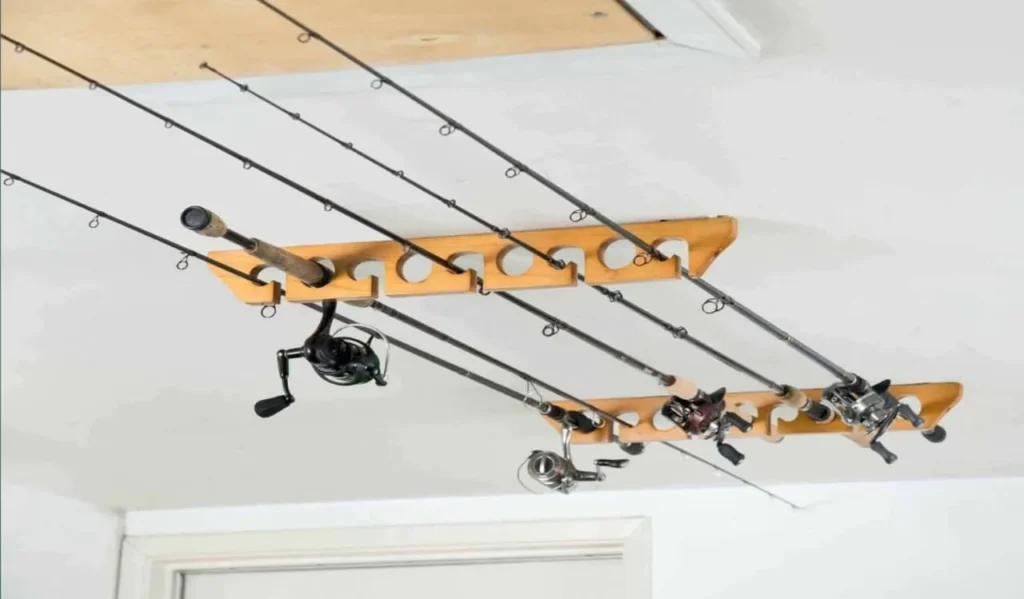
Fishing rods should be stored using rod racks or holders. Racks are either vertical or horizontal to ensure rods are not touching the ground in order to avoid bending. The rod blank and guides are scratched by foam, rubber or padded racks. Wall mounted racks occupy less space and are easy to organize various rods. The quality rod rack will guarantee that all your rods are in a safe place.
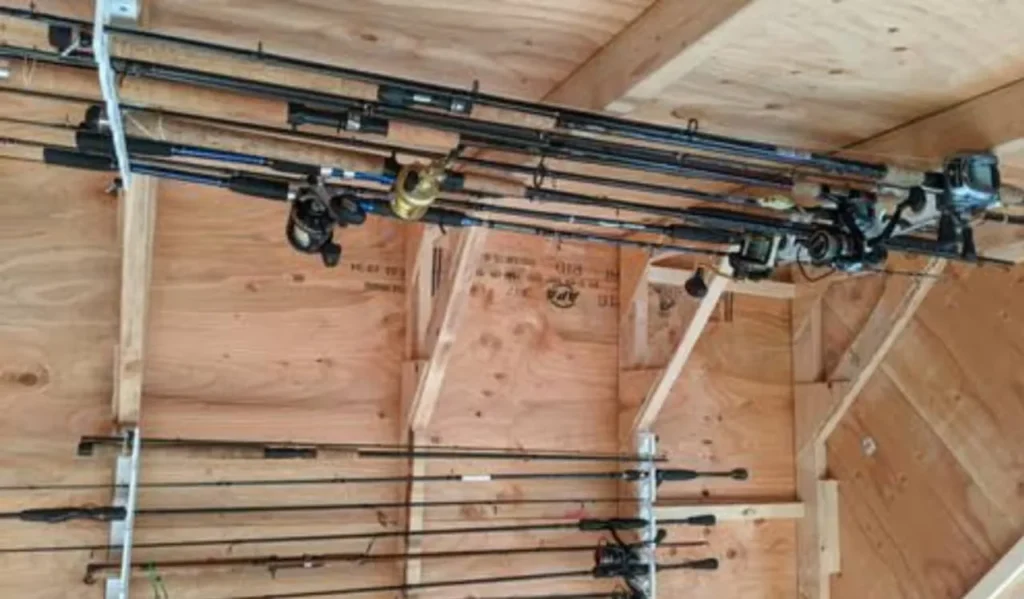
The separation of the rods in individual slots avoids the entanglement of the lines and guides. It also simplifies the process of obtaining certain rods in a short period of time. Adjustable racks are able to fit rods of various sizes and kinds. Have reels attached or removed according to storage space. Racks when used properly prolong the life of your fishing rods.
Must-Read Guide for Top Picks of Best Fishing Reels
Store Rods Vertically or Horizontally
Fishing rods may be stored in a vertical or horizontal position, according to the available space and convenience. Vertical storage lessens the chances of bending and warping with time. Position the rods with their tips up so as not to press on the tip guides. Horizontal storage is effective when the racks are supported at several levels along the rod. The rod must be supported in the entire length in whichever method you have taken.
Do not keep the rods leaning long. Constant stress on one part can result in permanent bends. The rod is kept straight with the help of horizontal racks with padded supports. Rods are stored in vertical tubes or holders, which ensure that they are not knocked accidentally. Rods need to be well oriented to keep them in good condition.
Protect Rod Tips and Guides
The most susceptible components of a fishing rod are rod tips and guides. Tip protectors or soft cloth can be used to cover the tip against breaking. Guide covers are used to avoid snags and scratches in case of storing several rods. Check the shape of the guides when storing and check whether it is bent or cracked. Good protection maintains the integrity of the rod and helps in easing the flow of the line when fishing.
Particular attention is paid to rod tip protection of long and thin rods. The smallest damage may have an impact on performance and casting. Guide protection also helps to avoid the fraying of the line when storing. This is such a simple measure that saves on repair and prolongs the life of rods. Care should always be taken when storing or taking rods when using tips.
Different Types of Fishing Rods and How to Use Each Rod
Remove Reels or Loosen Drag
When storing rods for long periods, it is best to remove the reels or at least loosen the drag. Keeping the drag tight can compress internal parts and damage the reel over time. Reels are also removed to prevent accidental damage to the rod seat. Storing reels in a cool, dry place preserves their lubrication and functionality, complementing proper rod storage.
In case you want to have reels attached, make sure that lines are loose and reels sufficiently supported. Do not stack rods having reels forced against each other. Proper handling of the reel will avoid the extraneous pressure on the rod blank. This technique also eliminates the possibility of tangles and corrosion. An important aspect of the rod storage is reel maintenance.
Avoid Overcrowding and Pressure
Rods should not be crammed in storage; they may bend or have cracks. Space should be left between rods to allow guides to tangle. Heavy objects should not be placed on top of rods or should not be pressed against walls. The rod blank can be warped even by light pressure with time. The spacing is done well so that all rods are in shape and sensitive.
Rod retrieval is also not easy due to overcrowding. It raises the possibility of accidental scratches and knocks. There is an organized storage that will enable you to access the rod required quickly. Having clean space improves safety and increases the life of rods. Care will eliminate expensive repairs and replacements.
Different Types of Fishing Reels and How to Use Each Reel
Protect Rods from Moisture and Pests
Fishing rods that are stored may be spoilt by moisture and pests unless they are stored with care. Storages should be kept dry using silica gel packs or dehumidifiers. Check cork grips and foam plugs to use in mold or insect damage. Store rods in unprotected basements or damp garages. To maintain the performance and the appearance, it is important to store rods in a dry and pest-free environment.
It also helps to avoid chewing of rod handles and lines due to pest protection. Check rods at regular intervals to confirm whether they are damaged or not. Wipe rods with a cloth and dry, and then store them to reduce chances of moisture. Frequent checks can be used to preserve the sensitivity and integrity of the rods. Correct care guarantees the usability of rod in the long run.
Label or Organize Rods by Type
Storage is more efficient by sorting rods according to type, length or target species. Label racks/compartments in such a way that you are able to locate the rod you need in a short period. Putting rods in groups eliminates confusion and leads to unnecessary handling. This is also done by organization of rods so that they are not damaged accidentally during searching. Effective storage will save time when going fishing.
Further convenience is gained on categorizing rods based on the type of action, power or the type of lure. It enables the angler to pair rods with particular techniques in a short time. Favorable labeling of rods makes sure that they go back to their place. This is an organization that helps avoid clutter and stress. Space can be well organized to enhance safety and accessibility.
Regular Inspection and Maintenance
Rods should be checked frequently even when placed in an appropriate way. Ensure that there are no cracks, loose guides or corrosion on metal parts. Tighten loose reel seats and clean rods every now and then. Replace broken tip tops or guides as soon as possible to avoid deterioration in the issues. The inspection is done frequently to make sure that the rods are in readiness.
Lubrication of moving parts and wiping down handles is also considered as maintenance. Early repairs are much cheaper than replacement that comes later. Frequent care maintains rods in their optimum performance. Regular maintenance goes with appropriate storage procedures. This guarantees long life time and high performance fishing gear.
FAQs About How to Store Fishing Rods
Final Thoughts
Proper storage of fishing rods is essential to maintain their performance, sensitivity, and durability. By cleaning, organizing, and protecting rods, anglers can prevent damage and enjoy smoother fishing experiences. Correct storage also reduces the need for costly repairs or replacements. Using racks, maintaining proper spacing, and handling rods carefully significantly extends their lifespan.
Proper storage should be complemented by regular inspection and maintenance. Knowing how to store rods ensures they are ready whenever you go fishing. Safe storage protects both the rods and your investment in quality equipment. Ultimately, correct storage enhances fishing success and enjoyment on every trip.