Ultimate Surf Fishing Guide 2026: Top Gear, Baits and Beach Fishing Tips
Discove surf fishing guide for beginners with expert tips on gear, bait, rigs, tides, and safety to land more saltwater fish from shore.
Surf fishing is one of the popular fishing techniques that fishermen cast their lures or bait straight into the ocean. Surf angllers do not use boats; instead, they stand on rocky shores, beaches or piers to fish saltwater species. This is an interesting method as it enables one to reach the magnificent game fish without the need to be on the sea and with not much equipment and preparation involved.
Surf fishing is a cheap and thrilling activity which offers numerous rewards to many amateurs. It requires the right equipment, basic skills and knowledge of tides to be successful. It provides a special adventure of fighting powerful fish with bare equipment and patience. It is difficult to resist the force of waves and sandy beaches, which makes each catch a memorable.
What Is Surf Fishing?
Surf fishing is the act of fishing salt water fish along the shore using a bait or a lure thrown into the surf area. This region is in between crashing waves and deeper waters where killer fish hunt on smaller fish that have been pushed away due to the movement of the waves. Fishermen do not require any boats and they use long casting range to access favorable feeding areas.
The species targeted by this fishing style include striped bass, redfish, bluefish and flounder depending on the location. The waves stir the sand and bait, providing the perfect conditions of feeding. Surf fishing involves knowledge of how water flows, where to put the bait and when to place it in order to identify the area where fish habitually roam along the shore in search of food.
Must-Read Guide for Anyone Looking for Top Rods
Best Locations for Surf Fishing
Surf fishing is more effective in sandy beaches that have steady waves and easy access to the shore. Fishing off sand bars, drop-offs, mouths of rivers and troughs are excellent places to feed fish. These underwater formations entrap baitfish and form natural paths which give predators an avenue. The tides and waves drive the prey to these environments, and they are therefore favorable to fish successfully.

The presence of rocky shoreline and jetties also favors productive surf fishing in the sense that they give shelter and ambush points to the predatory fish. The positioning of fish depends upon beach slope, water clarity and movement of tides. Experienced surf fishermen always notice the waves and the color of the water to see the deeper spots where fish congregate to eat.
Surf Fishing Rods and Reels
Surf fishing rod is normally long in length between ten and fourteen feet in order to attain long casting distance. These rods are constructed using heavy power to tackle strong surf waves, heavy sinkers as well as powerful saltwater fish. Also used with the surf rods, there are big spinning or conventional reels that are strong, high capacity, and with good drag performance when under pressure.
Long casts and powerful fish require a lot of thick monofilament or braided line and as such, surf reels need to have a lot of capacity. In saltwater conditions, corrosion resistance is also of importance. Adequate rod and reel balance enhances the efficiency of casting, minimises fatigue and offers a better control during fighting powerful surf species.
Different Types of Fishing Reels and How to Use Each Reel
Best Fishing Line for Surf Fishing
The surf fishing line should be able to resist long casting range, pull of the waves and fish that are hard to fight. One of the reasons why braided line is popular is that it has a thin diameter and is stronger and therefore, it has a longer cast and is more sensitive. The use of monofilament is also common due to its shock absorbing property that is caused by crashing waves.
They are usually equipped with fluorocarbon leaders to enhance resistance to abrasion by sand, rocks and fish teeth. Surf fishing success depends on the line capacity and strength, as well as against salt water corrosion. The proper line set up avoids break-offs and enhances hook-setting capabilities in rough surfing.
Surf Fishing Rigs Explained
Surf fishing rigs assist in presenting the bait in the high-speed surf. Popular rigs are fish finder rig, high-low rig and Carolina rig. These rigs anchor bait in moving water with the help of sinkers but with natural movement. Surf rigs are designed in such a way that they avoid entangling and increase their visibility to the feeding fish.
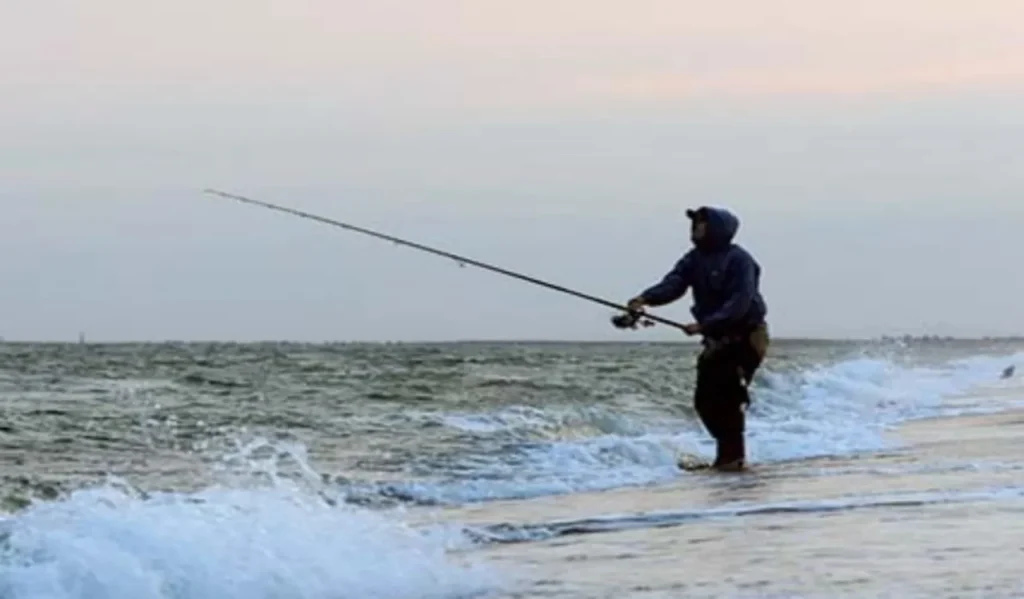
Rigs are fitted to attack fish depending on the strength of the waves, the bottom structure and the species that is being hunted. To avoid drifting of the bait, heavy pyramid or sputnik sinkers may be added. An appropriate rig will maintain the bait in effective areas of striking even when there are strong currents and surging waves.
Best Baits for Surf Fishing
Live and natural baits are very efficient in surf fishing since they are identical to natural food sources of saltwater fish. Shrimp, squid, sand fleas, clams and cut bait such as mullet or bunker are popular surf baits. These attractants emit powerful smell trails that appeal to fish when there is a lot of noise in the ocean.
Active species also respond to artificial lures in the form of spoons, soft plastics and topwater plugs. The success rates increase when bait choice is matched to the local forage. New bait has a better smell and feel and has a higher probability of good hook-ups even in rough surf conditions with a low visibility.
Different Types of Fishing Rods and How to Use Each Rod
Reading the Surf Zone
The ability to read the surf zone is among the key skills to successful surf fishing. The angllers seek darker waters, wave breaks and irregular wave patterns which signify deeper troughs and the underwater structure. They are feeding zones along which predatory fish move as they look forward to bait forced by a wave action.
Sandbars form the paths through which the waves break unequally, which indicates the existence of deeper water between them. Fish also use the rips as feeding channels. Realizing these features can assist the angling community in not casting blindly, but rather, they will be able to put the bait where fish will definitely be during the movements of the tides and when they are actively feeding.
Best Time for Surf Fishing
Surf fishing is usually best at high tide as opposed to time of the day. Bait and feeding behavior are stimulated and moving in and out tides move the bait. Mornings and evenings are also good since it is during this time that fish are brought nearer to shore due to the low light to enable safe feeding. Surf fishing also has seasonal variations that influence the success.
Warm seasons draw migratory species nearer to the shore, and cool seasons cause changes to the feeding habit to a deeper level. The activity of the surf fish is affected by the wind direction, the moon phase, and the water temperature. Proper timing of your sessions is a great way to boost the rate of catch and productivity in general.
Must-Read Guide for Top Picks of Best Fishing Reels
Safety Tips for Surf Fishing
Surf fishing is an activity whose power of the waves, slippery sand and other weather unpredictabilities are the order of the day and so, safety is at the forefront. Always consult the tide chart and the weather forecasts before going out. Powerful rip currents may be hazardous and one should always watch out on the wave patterns and never have their back towards the ocean.
The right shoe wear enhances the wet sand and rock grip. Staying out of the crashing waves eliminates the sudden knockdowns. Failure of equipment is avoided by using corrosion-resistant gear. Limited equipment helps to move fast in case of some change in the conditions. Surf fishing is fun when the angler admires the strength of the ocean ecosystem.
Common Surf Fishing Mistakes
Novices find it difficult in surf fishing because of wrong selection of gears or wrong positioning. Casting is restricted by the use of too short rods. In high waves, light sinkers do not hold the bait leading to poor presentation of the bait. Sightless casting on water structure commonly leaves out feeding areas.
Another frequent error is disregarding the tides which lowers the catch rates. Still fishing in slack water reduces the activity of fish. Lost fish are also due to poor knot tying, bad leaders and wrong drag settings. By preventing such errors, an angler will increase the chances of success, efficiency, and confidence, regardless of his or her level of skill in surf fishing.
FAQs About Ultimate Surf Fishing Guide
Final Thoughts
Surf fishing is a forceful combination of ease, thrill, and difficulty to all types of fishermen. It may be sandy beaches, raging waves, and it enables an angler to fish powerful saltwater creatures without boats and complicated systems. Surf fishing is easily available and very satisfying with the right equipment, bait and time.
Learning to read the surf, choose the right rigs, and time your fishing with the tides makes all the difference between success and failure. Small adjustments in methods and equipment can lead to stronger hook-ups and a smoother fishing experience. With patience and practice, surf fishing becomes more enjoyable.