
How to Store Fishing Reels Long Term: Complete Guide for Beginners
Learn how to store fishing reels properly with tips on cleaning, lubrication, drag adjustment, moisture control and maintenance.
Long-term storage protects fishing reels from corrosion, dust, moisture, and wear that can shorten their lifespan. Many anglers damage their reels by storing them incorrectly between seasons. Proper cleaning, lubrication, and placement keep the drag smooth, tolerances tight, and bearings healthy. Whether it’s a spinning, baitcasting, or spincast reel, correct storage prevents repairs and ensures your gear is ready when the season starts.
Long-term storage of fishing reels focuses on controlling the environment and mechanical conditions, not just putting them away. Temperature changes, humidity, tensioned drags, and dirty lines can damage components over time. Using simple professional steps can prevent gear wear, oxidation, and lubricant breakdown. This guide explains step-by-step storage techniques used by expert anglers and reel technicians worldwide.
Clean the Reel Thoroughly First
The best thing to do before long term reel storage is cleaning since dirt and salt are the cause of internal corrosion. Start by wiping the surface using a damp cloth to clean the surface. Apply soap on hard residue. Use low water pressure which will not push water into bearings. Clean surface will avoid the hidden rust spots which will just be developing over the months of storage in dark confined humid environment.
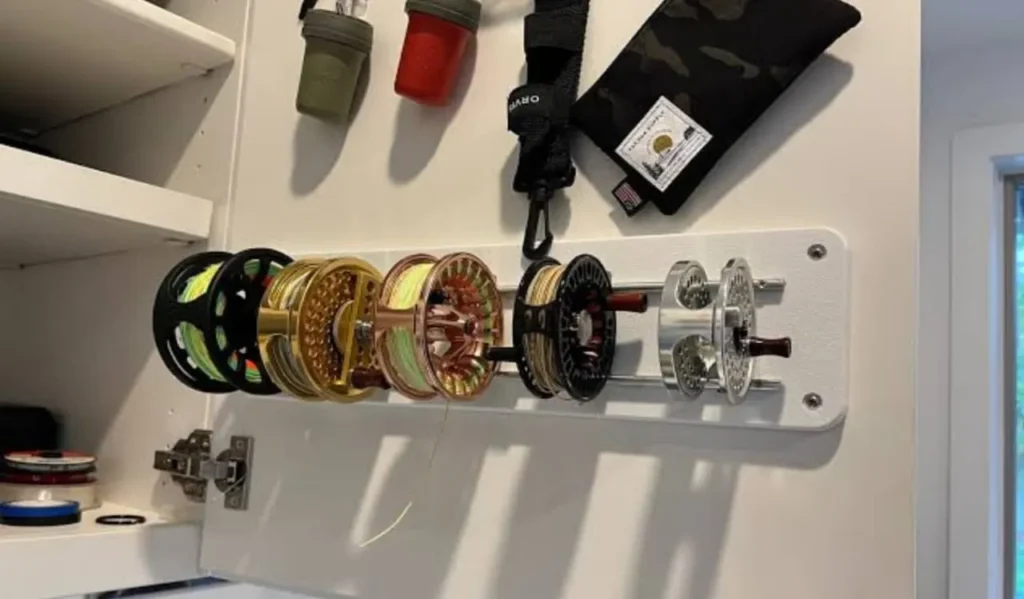
Once the surface has been cleaned, rinse off the spool where possible to clean inside the areas where salt and line debris accumulate. Lightly rub the line roller and bail arm and handle knobs with soft toothbrush. Blot all the parts with a microfiber cloth. Any moisture that is trapped is corrosion fuel on a long storage. Do not keep the reels that are damp to touch after cleaning external appearance dry.
Remove the Line Before Storage
For long-term reel storage, it’s important to remove the fishing line, especially monofilament or braided lines. Lines left on the reel can stretch or weaken over time, affecting casting performance. Loosening or removing the line reduces strain on the spool and drag system, protecting the internal gears. This ensures the reel will rotate smoothly and remain in good condition for future use.
In case it is inconvenient to remove all the line, loosen the drag at least. Washers can be crushed by tight drag when storing and deformed permanently. To identify that the reel is not binding, it is important to spin the handle lightly and make sure that it spins freely. In the case of braided line, keep in a dry container when not in use or it will be spoiled. These measures greatly increase the life of reel and minimise the expensive repairs during the long time storage.
Lubricate Moving Parts
Corrosion and wear of bearings, gears and shafts are prevented by proper lubrication in storage. Apply good quality reel grease and oil on identified areas such as the main gear, handle and line roller. Do not over-lubricate and this will draw dirt or gunk. Lubrication decreases friction, drying of internal grease and ensures the mechanical action is smooth so that your reels will act like new when the next season commences after a break in fishing.
Use oil sparingly on bearings and apply grease to gear teeth, following the manufacturer’s recommendations for type and amount. Avoid getting oil on drag washers, as it can cause slipperiness and performance issues. Regular lubrication, cleaning, and proper storage orientation prevent oxidation, stiffness, and squeaks. Checking reels before storage ensures no parts are missed and provides long-term protection for all your reels.
Must-Read Guide for Anyone Looking for Top Rods
Loosen the Drag Completely
Reducing the drag before storing a fishing reel prevents the drag washers from becoming permanently compressed. If stored under tension, the washers can deform, resulting in rough or inconsistent drag later. Always open all adjustable knobs and set the drag to minimal resistance. This simple step protects your reels long-term and ensures they remain in optimal condition for the next fishing season.
Calibrate front and rear drags (when necessary) and any micro-adjustable settings. Even the slight tension during the long period of time can lead to uneven wear. The loosely turning of the handle while loose will ensure that gears are free to move. You can sustain internal parts by alleviating stress. Drags are loosened and with adequate lubrication, corrosion, sticking and uneven tension on the lines are avoided, thus the performance of reels is good under long storage periods.
Choose a Dry, Cool Storage Location
It is recommended that reels be kept in a dry and temperature-controlled place to avoid rust and corrosion. Do not use damp basements, direct sunshine, or the very hot places. Moisture and sunlight are cause of quick oxidation of metals and damage drag washers and plastic parts respectively. Reels are stored in a cool, stable room to ensure that environmental stresses do not affect the reels and therefore the mechanical integrity of reels lasts longer, possibly months or even years.
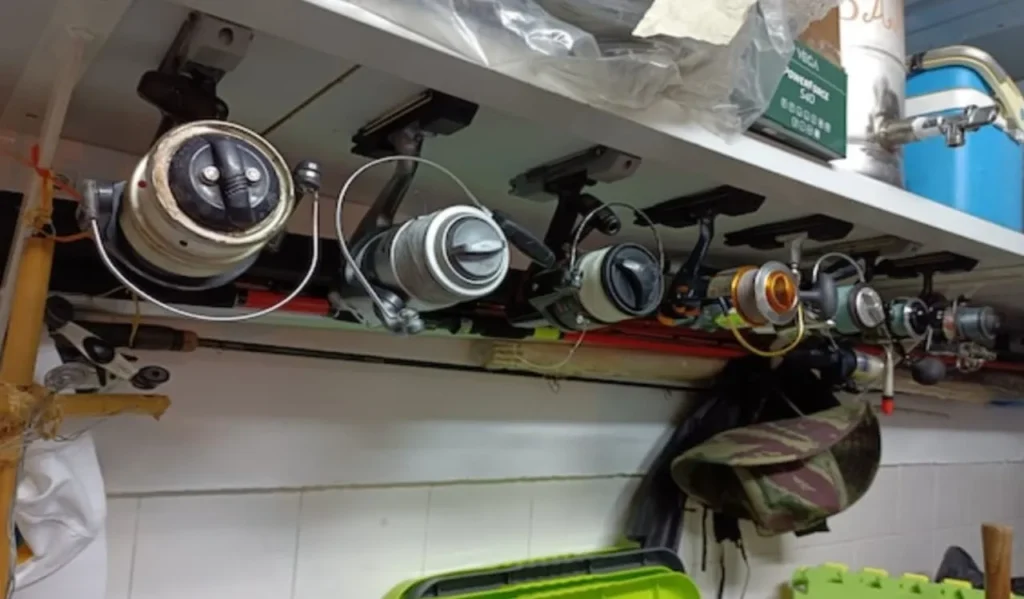
Be it a sealed cabinet, tackle box or protective reel case is preferable. Silica gel packets are added to eliminate the presence of moisture and thus to prevent rust. It is advisable not to stack heavy objects on reels or to put them on concrete floors. Regular temperature and ventilation preserve fragile bearings, lubricants and rollers of the line. Long-term storage conditions are important to the preservation of reel and to a continued performance at factory level with expensive repairs.
Must-Read Guide for Top Picks of Best Fishing Reels
Store Reels in Upright or Neutral Position
Reels should always be stored in an upright or a neutral position so that they do not strain the internal gears and bearings. When reels are laid on their sides or hung upside down they may experience different pressure resulting in permanent misalignment or binding. Adequate positioning will make lubrication balanced and will not deform. These tiny modifications make a huge difference in the life of the reels as the months of non-use are significantly extended.
Before storing a fishing reel, reduce the drag to prevent the drag washers from being permanently compressed. If stored under tension, the washers can deform, resulting in rough or inconsistent drag later. Open all adjustable knobs and set the drag to minimal resistance as a precaution. This simple step protects your reels long-term and ensures they remain in smooth, reliable working condition for the next fishing season.
Cover or Protect the Reel
Keep the reels covered, sleeved or/and put in protective cases to shield them against dust and debris. Long-term storage can cause dust to get into gears, bearings, and drag systems making them run smoothly. The simple solutions to protect reels at low costs are lightweight protective covers or zippered reel sleeves. Periodically maintaining and replacing protective sleeves ensures that reels are clean and less time is wasted on their maintenance.
Padded compartments or plastic cases or soft cloth covers that are placed inside a tackle box are effective. Do not use tight wraps which squeeze knobs or handles. Labeling is used to ensure that reel type and size is readily determined. Protection with proper orientation of storage would also guarantee the minimum exposure to moisture, dust or unintentional bumps. This is an easy measure, which greatly extends the life and service of all fishing reels of your collection.
Different Types of Fishing Reels and How to Use Each Reel
Regularly Inspect Stored Reels
Even if it is long-term storage, regular inspection helps to avoid hidden damage or corrosion. Check the clearing of the reel, spools and grips for rust, dirt or stiffness. Spin the reel and observe that it is moving easily and inspect the drag washers for compression. Consistent maintenance will save your reels and keep them in top mechanical condition to save money on costly repairs down the road.
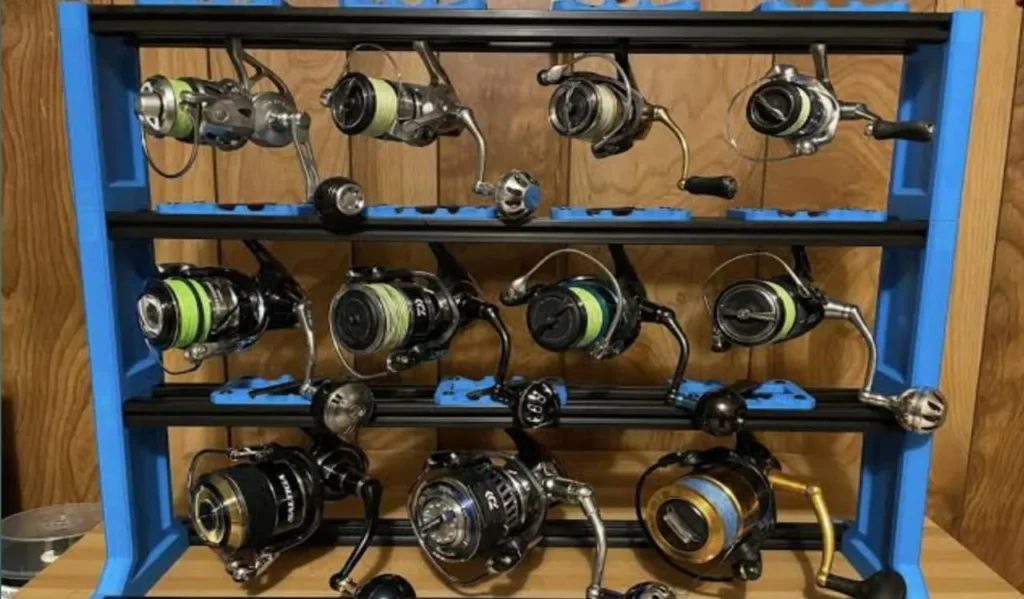
If any lubrication has dried up or wasn’t applied, add new oil or grease as recommended by the manufacturer. Check for line residue or debris that may have accumulated during storage. Regular inspections help identify potential problems early, protecting the reel’s lifespan. Performing basic checks every few months ensures your reels are ready for action and remain protected long-term
Use Silica Gel or Moisture Absorbers
The main adversary of long-term reel storage is moisture which causes corrosion and the development of molds. Being in reel storage cabinet, it is important to place silica gel packets or other moisture absorbers to avoid the accumulation of humidity. This will provide a controlled atmosphere that will ensure the metal components are dry, drag washers are not damaged and the internal components are operating at its best level. Wetness is a major factor in inhibiting degradation of reel within a few months.
Silica packets should be changed every now and then when they become saturated. Natural air circulation should not be used only, since basements or garages usually have hidden humidity. The appropriate management of moisture collaborates with the lubrication, cleaning and proper position of the reel to offer total protection of the reel in the long term. This is a mere precaution that would save the life of your investment, since reels are in good condition and can be used whenever you take up fishing again.
Different Types of Fishing Rods and How to Use Each Rod
Label and Organize Your Reels
To make storage and future retrieval easy, labeling of the reels in terms of brand, model and size is done. Organization ensures that no one gets lost, the handling error is minimized, and the needless stress on reels is avoided. Use a special shelf, a special drawer or a special tackle box with compartments. The labels are used to seek reels in a hurry according to style or species of fishing. Properly arranged storage reduces the risk of damage and time wastage in packing to go on trips.
Store the reels by type, frequency of use or season. Store reels were used collectively close to one another in order to minimize handling. Store heavier reels at the low shelves to avoid any falls. The longevity is maximized by the consistent organization, the use of protective covers, and the use of upright storage. A labeled system also makes it easy to maintain, inspect and change reels to store away long term and have your fishing gear in full operation.
FAQs About How to Store Fishing Reels
Final Thoughts
All fishing reels will maintain their performance, longevity, and reliability when properly stored on a long-term basis. The steps that are necessary include cleaning, lubrication, drag loosening, dust protection, and moisture control. These practices also mean that reels are always ready, less maintenance, and no expensive repairs. Off-season makes reels safe as the angler is assured that the equipment will work efficiently as soon as fishing starts again.
These storage habits are supplemented by organization, labeling and periodic checks. The time spent in taking good care will make your fishing equipment last longer. Regardless of the type of reel, be it spinning, baitcasting or spincast, the long-term storage will guarantee the right mechanical operation. Through these practices, the angler will be able to have a season of quality and high-performing reels, and therefore, all fishing experiences are efficient and enjoyable.