How to Use a Baitcasting Reel: Ultimate Guide for Beginners
Learn how to use a baitcasting reel with step-by-step setup, casting tips, drag control, and beginner-friendly techniques for smooth, accurate fishing.
Baitcasting reels can feel challenging to use, particularly when a spinning reel user is switching to this particular reel. Baitcasting reels are more accurate, controllable, and powerful and thus favourable to the experienced angler. A proper use of one will open up new skills in fishing, as well as enhance the effectiveness of placing lures, particularly when fishing bigger fish in heavy cover or offshore.
Most novices are not able to use baitcasting reels because of backlash and incorrect installation. These fishing reels, however, when properly adjusted and practised, are very efficient and pleasant. It is necessary to know about spool tension, braking systems, and casting technique. This manual is easy to follow and one can master the art of using a baitcasting reel with ease and precision.
Understanding How a Baitcasting Reel Works
A baitcasting reel is placed on the rod and discharges line straight off a rotating spool. The spool rotates during casting as opposed to spinning reels, which gives it more accuracy and strength. This is what makes baitcasting reels the best in heavier lures and stronger fish, but also demands more control on the part of the angler.
The reel has a thumb bar, braking system, spool tension knob and star drag. All its parts are involved in the regulation of the line release and spool speed. Knowledge of these parts will aid the beginners not to experience backlash but learn to cast with smooth and controlled techniques.
Must-Read Guide for Anyone Looking for Top Rods
Choosing the Right Rod and Line
Baitcasting reels can be used with a baitcasting rod that has heavier lines and lures. Beginners should use medium to medium-heavy rods due to the fact that they give balance and forgiveness. The reel and the desired fishing method should be compatible with the rod in terms of its power and action.
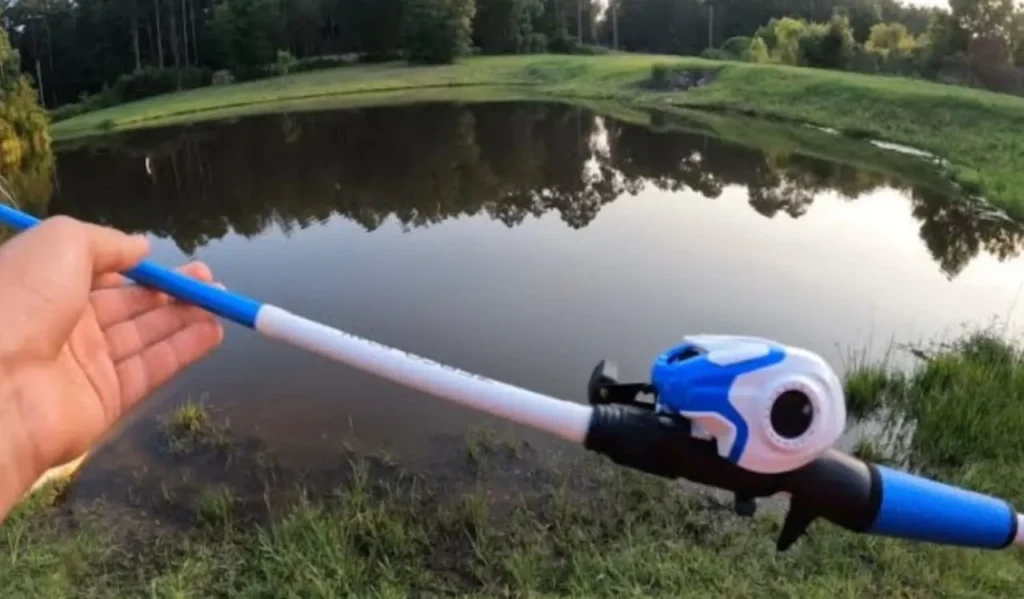
The novice baitcasters should use monofilament line. It is less hard to handle and is more lenient than braided line. The proper line weight depends upon the rod and reel described and is a good way of minimizing backlash and enhances casting consistency early practice.
Setting the Spool Tension Correctly
Spoil tension regulates the freedom of the spool as it spins in the casting. In order to make it, you can tie your lure and hold the rod horizontally. Turn the tension knob either clockwise or anti-clockwise until the lure drops gradually to the ground when the thumb bar is released. This simple environment is a way of avoiding backlash.
In laypersons, a little more tension of the spool is desirable. It gives better control though it decreases casting distance. The tension may be gradually relaxed with an increase in skills. The correct tension of the spool is the key to successful baitcasting and helps to avoid much frustration when using it at the beginning.
Must-Read Guide for Top Picks of Best Fishing Reels
Adjusting the Braking System
The braking system reduces the speed of the spool when casting to eliminate overruns. Baitcasting reels are either magnetic braked, centrifugal braked or dual braked. Beginners need to use advanced brake settings in order to control and reduce backlash as they learn how to cast appropriately.
When confidence is found, it is possible to lower the brake settings and cast further. Changes must be done slowly and in small batches. Knowing the principles behind braking systems enables the angler to be able to adjust to various lures, wind, and casting styles with much precision and effectiveness.
Learning the Proper Grip and Thumb Control
It is better to hold a baitcasting rod properly to have more control and comfort. Lay your thumb over the spool, and put your fingers around the reel seat. The thumb will be of essential importance in managing the speed of the spool when casting and preventing the line when the lure enters water.
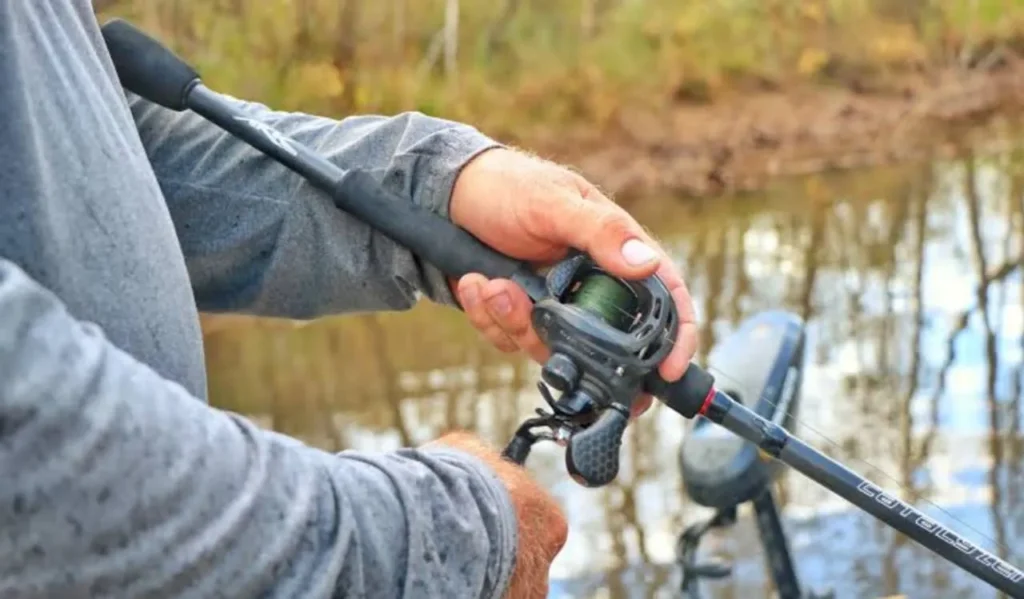
Thumb control is something that is practiced. The beginners should learn to cast softly feathering the spool but not pressing hard. Backlash can be avoided and accuracy can be enhanced by training to use the thumb properly when baitcasting reels become more manageable and rewarding as time goes on.
Different Types of Fishing Rods and How to Use Each Rod
Making Your First Cast
To cast, press the thumb bar and hold your thumb on the spool. Take the rod back in a smooth motion then swing in a controlled motion. Part the thumb pressure slightly then the rod is pushed forward so that the spool can move freely and it releases line.
When the lure is close to the water, press the thumb to slow and stop the spool. This will avoid overruns and enhance accuracy. To gain confidence and consistency in long distance casting, beginners should first use short controlled casts before attempting long distance casting.
Retrieving the Line Smoothly
Once the casting is complete, pick up the reel by turning the handle and commence the line by steadily reeling. Sudden jerks or quick retrieves should be avoided unless necessary by the lure. Lure action is kept with a smooth retrieve which helps to better detect bites particularly with shy fish.
Fel the lure with the rod. Baitcasting reels are also very sensitive, and one can tell when an individual has struck. When a fish strikes, it is best to keep your thumb light when retrieving as this helps to keep the spool taut and in the event of a fish, this will enable you to have a quick hook set.
Different Types of Fishing Reels and How to Use Each Reel
Avoiding and Fixing Backlash
Backlash, also referred to as a birds nest, is caused when the spool turns with a greater rate than the line. Newcomers are likely to receive backlash because of wrong tension, brake setting, or thumb control. This is minimized significantly by beginning with conservative adjustments in the course of learning.
Should there be a backlash, put the stop at once and, turning the spool, pull the line slowly. Tangled line should not be forced and this may ruin it. After practice, the backlash will be less common, and an angler will become confident of operating the reel.
Practicing in the Right Conditions
Train on baitcasting reel where there are few obstacles. The perfect weather is calm and consistent since the wind elevates the chances of backlash. Fishing on dry land or on open water enables fishermen to concentrate on their technique and not on distractions.
Long practice sessions are ineffective as compared to short and frequent sessions. Pay more attention to precision and regulation as opposed to range. Naturally, the more a person trains the better the muscles will remember and the coordination of the thumb during baitcasting reels will be easier and more enjoyable in the long term.
Building Confidence with Experience
The confidence is built when the angler gets used to using the reel adjustments and thumb controls. Every successful cast strengthens the technique and eliminates the fear of the backlash. Novice should be patient and realize that it takes time and practice to master the use of a baitcasting reel.
With better skills, the angler has the option of trying lighter lures, the brake set lower and more sophisticated techniques. Baitcasting reels are better in control and are versatile to learn. Regular practicing will turn the first difficulties into advantages and baitcasting will be an effective fishing tactic.
FAQs About How to Use a Baitcasting Reel
Final Thoughts
Once a person knows how to operate a baitcasting reel, there is increased precision, power, and fishing flexibility. Although it might seem difficult initially, with the right configuration and practice one will notice a big difference. Learning spool tension, braking systems, and thumb control are all ways of making beginner surmount the most common issues fast.
However, baitcasting reels are useful and fun to use with time and experience. They provide accurate lure set up and better control of fish-fighting. Through learning and practicing, an angler can easily employ the baitcasting reels and improve their overall performance of fishing.